



What's Happening?
Zara's flagship store at 660 Fifth Avenue in New York has reopened after a seven-month renovation. The redesigned three-floor location now features distinct sections for women's, men's, and children's collections, alongside advanced automated systems.
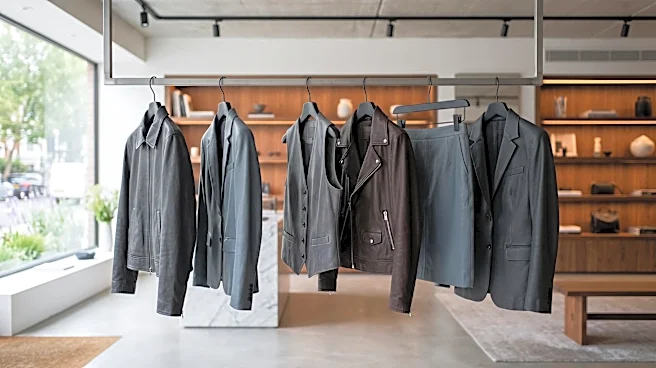
According to Modaes, this is the first Zara store in the United States to implement an automated system for identifying and sorting newly arrived garments and items returning from fitting rooms. Expansión reports this system can redistribute 3,000 garments per hour. The store also includes automated points for online order pickups and returns, as noted by Modaes, and is integrated with Zara's internal Inergy platform for tracking electricity and air-conditioning usage, per EFE. An exclusive capsule collection, featuring leather garments in muted tones and urban silhouettes, is available only at this location, as detailed by FashionNetwork USA. Despite the extensive renovation, Expansión states the store maintained its pre-closure staffing level of 200 employees.
Why It's Important?
The reopening of Zara's Fifth Avenue flagship signifies Inditex's strategic push for selective growth and increased investment in the U.S. market. Inditex CEO Óscar García-Maceiras's global strategy emphasizes larger stores with a wider product range, a point reported by El Confidencial, which this renovation exemplifies. The integration of advanced automation in a high-profile location like Fifth Avenue could set a new standard for retail efficiency and customer experience in the U.S. fashion industry. This move impacts competitors by raising the bar for in-store technology and service. While figures on Inditex's U.S. footprint vary, with Expansión describing the U.S. as its second-largest market and both Expansión and Modaes indicating over 100 stores, the consistent message is one of continued expansion. This expansion, including new projects in cities like Phoenix, Pittsburgh, and Denver, as reported by EL ESPAÑOL and Expansión, suggests a significant commitment to capturing a larger share of the American retail market, potentially leading to increased competition and innovation across the sector.
What's Next?
Inditex plans further expansion in the U.S., with EL ESPAÑOL reporting intentions for over 20 U.S. projects in 2027, encompassing new openings, renovations, and relocations. Expansión separately notes approximately 20 projects already underway, including new entries into cities like Phoenix, Pittsburgh, and Denver, and renovations in Miami and New York. This indicates a sustained effort to strengthen Zara's physical presence across the country. Beyond Zara, other Inditex brands are also expanding, with Massimo Dutti opening its first New York store in SoHo and Bershka establishing its first permanent physical U.S. store in Miami, according to El Confidencial and Expansión. These developments suggest a broader strategy by Inditex to diversify its brand presence and capture various segments of the U.S. retail market. The company's strong financial performance, with a first-half net profit of 2.98 billion euros, up 6.8% from 2025, as reported by EFE, provides the capital for these ambitious expansion plans.
Beyond the Headlines
The extensive automation implemented in Zara's Fifth Avenue store, particularly the system for sorting garments and automated pickup/return points, highlights a growing trend in retail towards leveraging technology to enhance operational efficiency and customer convenience. This shift could have long-term implications for retail employment, potentially altering the nature of in-store roles as more tasks become automated. The focus on exclusive capsule collections for flagship stores, like the '660 Fifth Avenue' labeled leather garments, suggests a strategy to drive foot traffic and create unique in-person shopping experiences that cannot be replicated online. This approach aims to differentiate physical retail in an increasingly digital marketplace. Furthermore, Inditex's commitment to preserving historical architectural elements while integrating modern technology, as seen with the store's original cast-iron columns and ornamental tin ceilings, reflects a broader industry effort to blend heritage with innovation, creating distinctive brand identities and consumer environments.