







What's Happening?
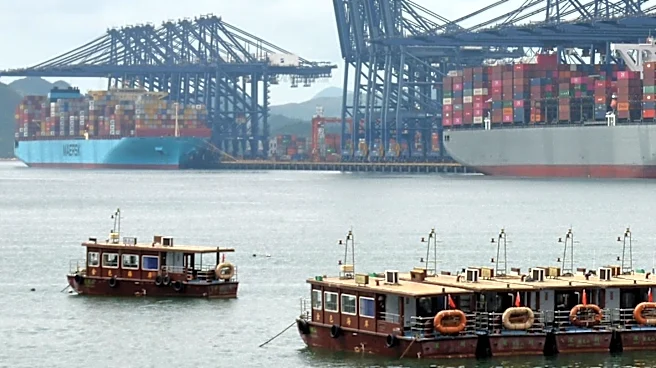
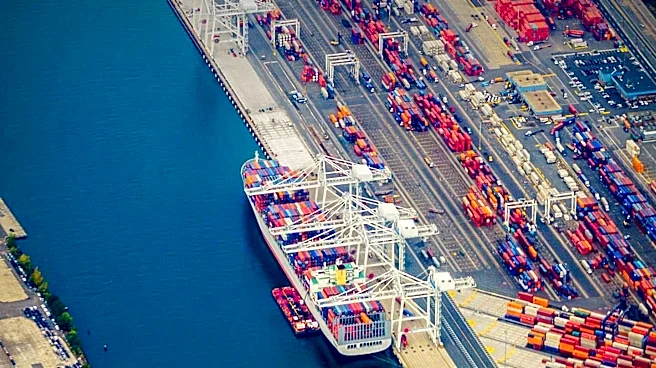
Global port delays and congestion are currently absorbing 5.0% of the world's deep-sea container shipping capacity, according to Sea-Intelligence. This figure represents a significant increase from the pre-pandemic average of 2.2% between 2011 and 2019.
The analyst group Linerlytica further notes that only 89 vessels worldwide are inactive, indicating that most capacity is tied up in delays rather than being idle. This 5% absorption rate means that 1.7 million TEUs (twenty-foot equivalent units) of global capacity are effectively 'missing' due to continuous delays. The reliability of global container vessel schedules remains stable but low, at 60-65%, a stark contrast to the 70-80% norm before the pandemic. Late vessel arrivals are now averaging 5-5.5 days of delay, up from 3-4 days previously. Asia, particularly Shanghai, Singapore, and Hong Kong, remains a hotspot for port congestion, along with major Northern European ports like Rotterdam, Antwerp, and Hamburg.
Why It's Important?
This persistent absorption of container shipping capacity due to port delays has significant implications for U.S. supply chains and the economy. The 'missing' 1.7 million TEUs of capacity is equivalent to the size of the world's 8th largest container shipping company, indicating a substantial reduction in available shipping space. This scarcity can lead to higher freight costs for U.S. importers and exporters, contributing to inflation and impacting the competitiveness of American businesses. Delays in receiving goods can disrupt manufacturing schedules, lead to inventory shortages, and ultimately affect consumer availability and prices. The structural shift towards longer and more frequent delays suggests that these issues are not temporary but rather a new normal, requiring U.S. businesses to adapt their logistics strategies and potentially invest in more resilient, diversified supply chains to mitigate future disruptions.
What's Next?
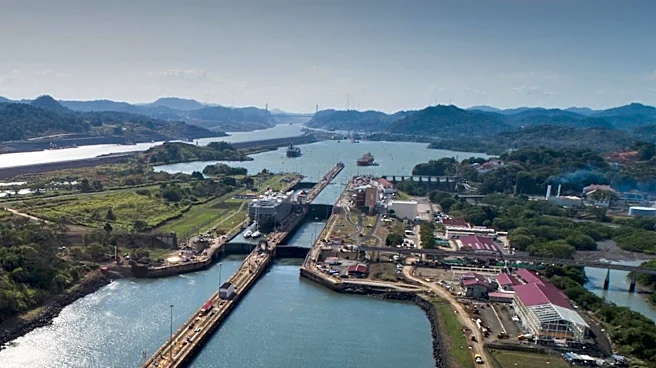
The container shipping industry is facing a complex future with potential overcapacity from newbuild vessels and the re-opening of routes like the Suez Canal. While these factors could theoretically free up capacity, the structural nature of port delays suggests that congestion may persist. U.S. businesses and policymakers will need to monitor these developments closely. Strategies might include investing in port infrastructure improvements, promoting digitalization to streamline logistics, and encouraging domestic manufacturing to reduce reliance on international shipping. Carriers may continue to adjust their schedules and pricing to account for these delays. The ongoing congestion in key Asian and European ports will likely continue to be a challenge, requiring U.S. companies to build in greater lead times and flexibility into their supply chain planning to manage the impact of these persistent disruptions.
Beyond the Headlines
The sustained port delays and capacity absorption highlight a fundamental vulnerability in the globalized economy, where the efficiency of just-in-time supply chains is increasingly challenged by external shocks and systemic inefficiencies. This 'new normal' of longer delays and reduced schedule reliability could trigger a broader re-evaluation of global trade models, potentially favoring regionalization or nearshoring for certain goods to reduce transit times and risks. The economic impact extends beyond direct costs, affecting business planning, inventory management, and ultimately consumer confidence. Environmentally, prolonged port congestion can lead to increased fuel consumption and emissions from idling vessels. This situation also underscores the need for greater international cooperation in port management and logistics infrastructure development to ensure the smooth flow of goods essential for global commerce and economic stability.