






What's Happening?
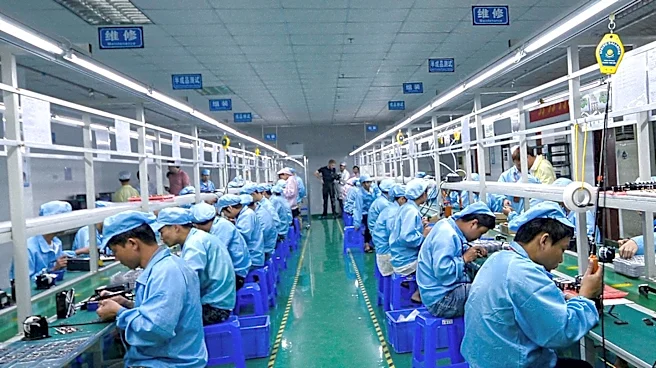
NXP Semiconductors has initiated a significant expansion of its assembly and test factory in Petaling Jaya, Malaysia. The project involves increasing the existing site to approximately 900,000 square feet of highly automated production space. This expansion is strategically
designed to enhance NXP's global manufacturing footprint and improve supply chain resilience. The company aims to more than double the site's output, supporting its broader hybrid manufacturing network, which includes planned joint ventures in Singapore and Germany. This move also deepens NXP's investment in Malaysia's semiconductor engineering talent pipeline. The expansion is seen as a measure to mitigate demand volatility and pricing pressure, particularly in key markets like China and the automotive sector, which are susceptible to cyclical swings and rising competition.
Why It's Important?
This expansion by NXP Semiconductors is crucial for the U.S. and global semiconductor industry as it directly addresses vulnerabilities in the supply chain that have been highlighted in recent years. By increasing highly automated production capacity and diversifying its manufacturing base, NXP aims to reduce reliance on single points of failure and enhance its ability to meet fluctuating demand. This strategic move can contribute to greater stability in semiconductor pricing and availability, which are critical for numerous U.S. industries, including automotive, consumer electronics, and industrial manufacturing. A more resilient supply chain for a major semiconductor player like NXP can help insulate U.S. businesses from future disruptions, ensuring a more consistent flow of essential components and potentially stabilizing costs for end products. The investment in Malaysia's talent pipeline also signifies a long-term commitment to developing skilled labor in the semiconductor sector, which could indirectly benefit the global talent pool.
What's Next?
The expanded Malaysian facility is expected to significantly increase NXP's output, which could lead to improved supply chain stability and potentially alleviate some pricing pressures in the semiconductor market. The company's focus on highly automated production suggests a move towards greater efficiency and reduced labor costs, which could impact its competitive positioning. Investors will be closely watching how this expansion reinforces NXP's 'local for local' manufacturing strategy and its ability to convert design wins into durable earnings amidst ongoing market volatility. The success of this project will also be a test case for other semiconductor companies considering similar regional expansions to enhance their own supply chain resilience. Furthermore, the deepening investment in Malaysia's engineering talent pipeline indicates a long-term strategy to foster a skilled workforce, which could attract further investment and development in the region's semiconductor ecosystem.
Beyond the Headlines
The expansion of NXP's Malaysian plant highlights a broader trend in the semiconductor industry towards de-risking supply chains and increasing regional manufacturing capabilities. This shift is driven by geopolitical considerations, the desire for greater control over production, and the need to respond more agilely to market demands. While the immediate focus is on operational efficiency and supply stability, this move also has significant implications for global trade dynamics and technological sovereignty. Countries are increasingly prioritizing domestic or allied-nation production of critical components like semiconductors to reduce dependence on potentially volatile regions. This could lead to a more fragmented but potentially more resilient global semiconductor landscape, with implications for international collaborations, trade agreements, and the distribution of technological expertise. The emphasis on automation also points to the ongoing evolution of manufacturing, where advanced robotics and AI play an increasingly central role in optimizing production processes.