








What's Happening?
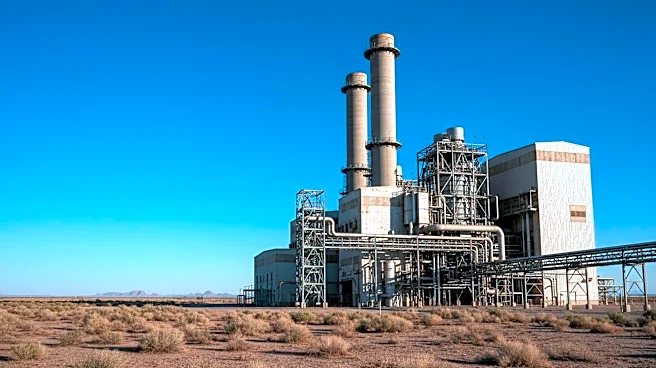
Arizona Public Service (APS) has announced plans to convert two retired coal-fired units at the Cholla Power Plant in Joseph City, Arizona, to burn natural gas. The conversion is set to begin in 2028, with the new units expected to generate 380 megawatts
of electricity and come online the following year. The Cholla Power Plant, which began operations in 1962, ceased coal burning at its last two units in March 2025. This decision aligns with federal regulations under the Regional Haze Program, which mandated the cessation of coal burning by April 2025. APS aims to utilize existing infrastructure to meet growing energy demands cost-effectively, emphasizing the importance of reliable and affordable energy for its customers.
Why It's Important?
The conversion of coal units to natural gas at the Cholla Power Plant is significant for several reasons. It reflects a broader trend in the energy industry towards cleaner and more flexible energy sources. By transitioning to natural gas, APS is not only complying with federal environmental regulations but also addressing the increasing demand for electricity in Arizona. This move is expected to enhance the reliability of energy supply, particularly during peak usage times, and contribute to a diverse energy mix that includes nuclear, solar, wind, and battery storage. The project also highlights the utility's commitment to minimizing costs for consumers while ensuring a stable energy supply.
What's Next?
The next steps for APS involve obtaining state regulatory approval for the conversion project. Once approved, construction will commence in 2028, with the new natural gas units operational by 2029. APS will also need to install a lateral line to connect the plant to an existing natural gas pipeline system. The utility's decision to convert the Cholla units is driven by the need to meet rising electricity demand, and it will likely continue to explore additional measures to enhance energy reliability and sustainability. Stakeholders, including environmental groups and local communities, may closely monitor the project's progress and its environmental impact.