


What's Happening?
A registered dietitian and working mother of two, Johannah Katz, is challenging the societal pressure on parents to create elaborate, picture-perfect school lunches. Despite her professional background in nutrition, Katz openly admits to using shortcuts
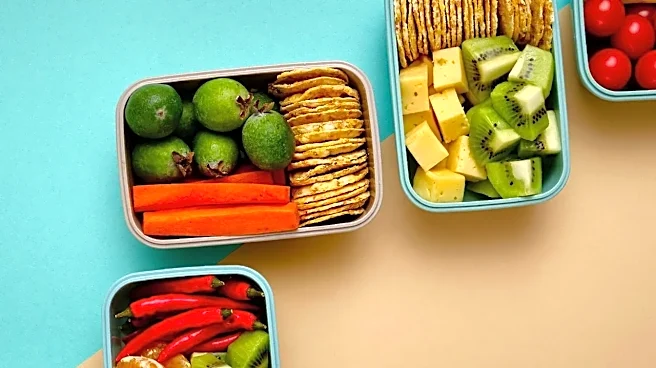
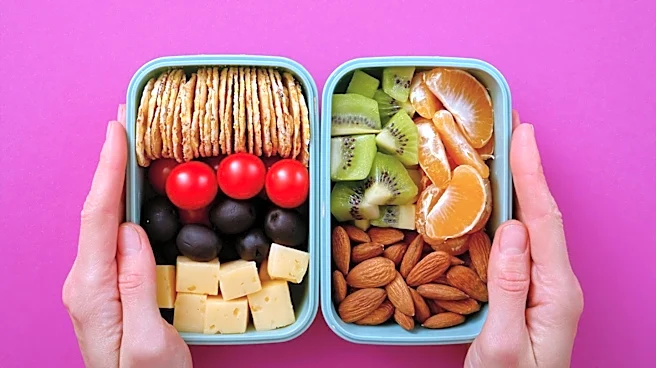
like store-bought peanut butter and jelly sandwiches and repeating meals for her children's lunches. She prioritizes ensuring her kids receive balanced nutrition, focusing on categories like protein, fiber-rich carbohydrates, fruits, vegetables, and healthy fats, rather than aesthetic appeal or homemade exclusivity. Katz emphasizes that perfection is an impossible standard and that convenience supports consistency in healthy habits. She uses time-saving tools and relies on minimally processed store-bought items to manage the demands of a busy schedule, advocating for parents to release the guilt associated with not meeting unrealistic expectations for school lunch preparation.
Why It's Important?
This perspective from a nutrition professional is significant because it directly addresses and normalizes the struggles many parents face in balancing healthy eating with demanding schedules. The 'Pinterest-perfect' lunchbox trend often creates undue pressure and guilt for parents, particularly mothers, who may feel inadequate if they cannot replicate such elaborate preparations. Katz's approach validates the use of practical shortcuts and repetition, shifting the focus from aesthetic perfection to consistent nutritional adequacy. This can alleviate parental stress and decision fatigue, promoting a more sustainable and realistic approach to feeding children. By openly sharing her methods, Katz helps to dismantle unrealistic societal expectations, fostering a healthier mindset around parenting and nutrition. This is crucial for promoting mental well-being among parents and ensuring that children receive adequate nourishment without adding unnecessary burdens to family life.
What's Next?
Katz's message is likely to resonate with a broad audience of parents, potentially influencing a shift in how school lunches are perceived and prepared. Her advocacy for practical, balanced nutrition over elaborate presentations could lead to a reduction in parental guilt and an increase in confidence among those who feel overwhelmed by unrealistic standards. This approach might also encourage food companies to develop more convenient, minimally processed, and nutritionally sound options for children's lunches. The conversation around 'mom guilt' and the pressures of modern parenting is expected to continue, with more voices like Katz's contributing to a more realistic and supportive dialogue. Ultimately, this could lead to a more balanced and less stressful approach to family nutrition, benefiting both parents and children.
Beyond the Headlines
This story delves into the broader societal issue of parental pressure and the idealized image of parenting often perpetuated by social media. The concept of 'mom guilt' is a pervasive challenge, and Katz's candidness helps to deconstruct the myth of the 'perfect parent.' Her experience as a dietitian highlights the disconnect between theoretical nutritional knowledge and the practical realities of daily life for working parents. This raises questions about how societal expectations, often amplified by online platforms, impact mental health and well-being. The emphasis on convenience supporting consistency in healthy habits also has implications for public health messaging, suggesting that practical, achievable strategies are more effective than aspirational, time-consuming ones. This narrative encourages a more compassionate and realistic view of parenting, recognizing that 'doing the best we can' is often sufficient and that self-compassion is as important as providing optimal nutrition.