


What's Happening?
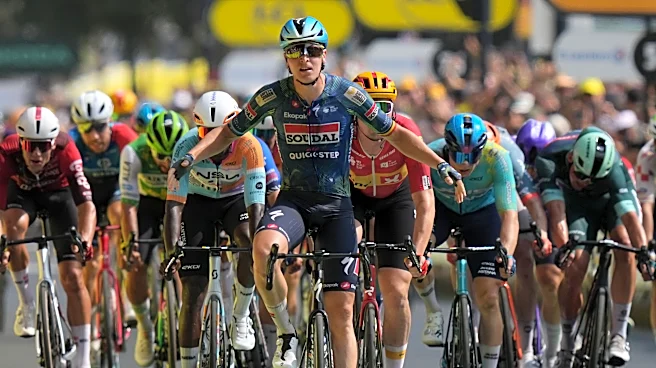
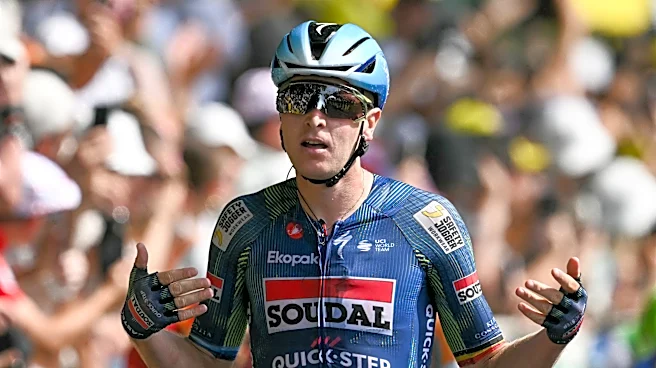
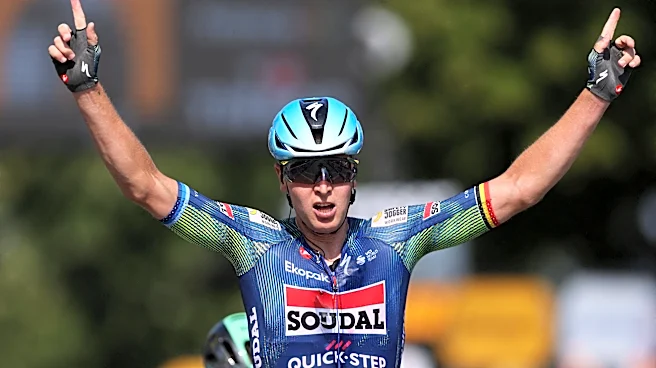
Belgian cyclist Tim Merlier clinched victory in Stage 7 of the Tour de France, which concluded with a sprint finish in Bordeaux. Merlier, riding for the Soudal Quick-Step team, executed a well-timed attack to secure his fourth stage win in the Tour. Meanwhile,
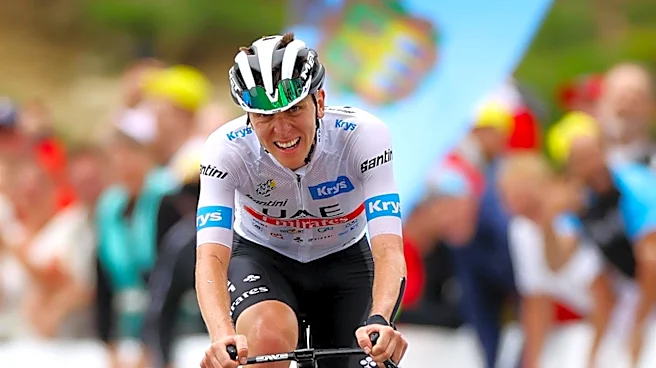
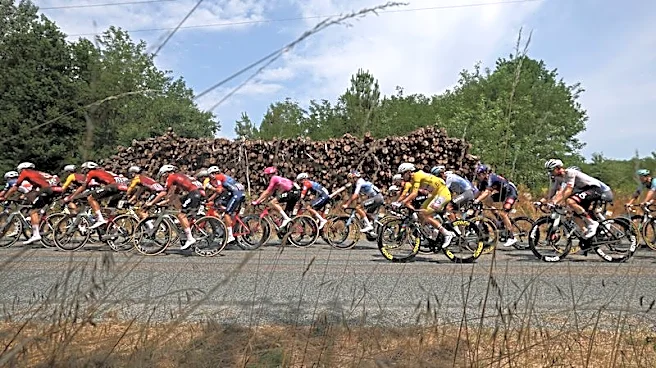
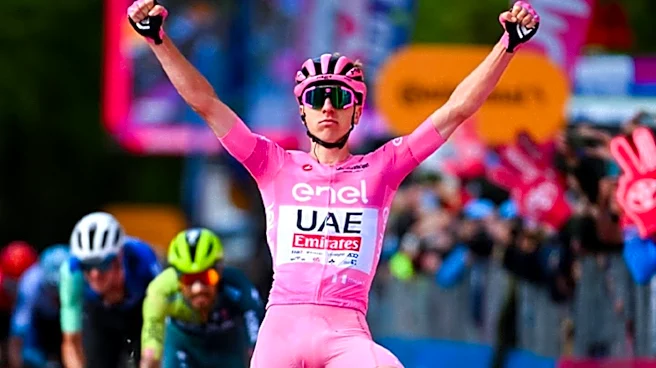
race favorite Tadej Pogačar maintained his lead in the overall standings, keeping the yellow jersey. Pogačar, a four-time Tour champion, finished safely in the main pack alongside his closest rival, Jonas Vinegaard, preserving his lead of 2 minutes and 42 seconds. The stage, characterized by a mostly flat 109-mile route from Hagetmau to Bordeaux, saw temperatures soar to 97 degrees Fahrenheit amid a heatwave. A two-man breakaway by Baptiste Veistroffer and Jakub Otruba was caught with just over 11 miles remaining, setting the stage for a sprint finish. Norwegian Soren Waerenskjold and Eritrean Biniam Girmay finished second and third, respectively.
Why It's Important?
The victory by Tim Merlier highlights the competitive nature of the Tour de France, showcasing the strategic prowess of teams in positioning their sprinters for stage wins. Tadej Pogačar's retention of the yellow jersey underscores his dominance and consistency in the race, reinforcing his status as a leading contender. The ongoing heatwave presents additional challenges for riders, impacting their performance and strategy. The Tour de France remains a significant event in the cycling world, drawing international attention and influencing the careers of participating athletes. The race's outcome can affect team dynamics, sponsorships, and the broader cycling calendar.
What's Next?
Stage 8 of the Tour de France is also designed for sprinters, concluding in the southeastern city of Bergerac. As the race progresses, teams will continue to strategize to place their riders in advantageous positions for stage wins and overall standings. The Tour will culminate with its traditional finish in Paris on July 26, where the overall winner will be crowned. The ongoing heatwave may continue to influence race conditions, requiring teams to adapt their strategies accordingly.