





What's Happening?
A new 5,000 m² pilot facility, the Biotech Open Platform (BIOP), has opened in France, dedicated to accelerating ingredient innovation through precision fermentation. This initiative, a collaboration between Danone, Michelin, DMC Biotechnologies, Crédit
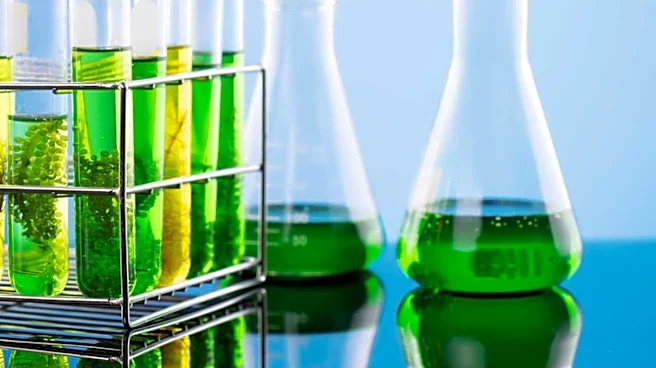
Agricole Centre France, Clermont Auvergne Innovation, and Greentech, has seen over €20 million invested. The facility houses advanced fermentation-based infrastructure, including a complete fermentation line with a capacity of up to 15 m³ and semi-industrial purification systems. Its primary goal is to help start-ups and companies bridge the gap between laboratory-scale development and industrial-scale production by providing access to facilities for validating technical processes and conducting application testing. Precision fermentation, the core focus, utilizes microorganisms like yeasts, bacteria, microalgae, and fungi to produce ingredients that are structurally bio-identical to their natural counterparts, enabling sustainable production of existing ingredients and the creation of new compounds.
Why It's Important?
The opening of the BIOP facility is significant for the food and ingredient industries, including those in the U.S., due to its potential to revolutionize sustainable production. Precision fermentation offers a method to produce ingredients with considerably less land and water usage compared to traditional agriculture and livestock farming, thereby reducing carbon emissions and greenhouse gases. This technology also provides a stable production method, unaffected by weather patterns, droughts, or poor soil, offering a crucial safety net for food manufacturers. For U.S. companies, this innovation could lead to more resilient supply chains, reduced environmental footprints, and access to novel ingredients that meet growing consumer demand for sustainable and ethically produced products. It also presents opportunities for U.S. biotech start-ups to collaborate with or leverage such facilities for scaling their own innovations, potentially fostering a new wave of sustainable food and material production.
What's Next?
The BIOP facility is now ready to welcome its first advanced fermentation projects, focusing on the development of proteins, vitamins, fibers, and other nutraceutical ingredients. In the long term, the ambition is for BIOP to become a central hub for a biotechnology ecosystem, strengthening European industrial capabilities and translating scientific discoveries into industrial solutions. This could lead to a proliferation of bio-based or bio-sourced ingredients, making production processes more efficient and sustainable. For the U.S., this development signals a growing global trend in sustainable ingredient innovation, which may prompt increased investment in similar domestic facilities and research. U.S. food and cosmetic manufacturers will likely explore incorporating these new sustainable ingredients into their product lines, driven by both environmental concerns and consumer demand for innovative, eco-friendly options.
Beyond the Headlines
Beyond its immediate impact on ingredient production, the BIOP facility highlights a broader paradigm shift towards bio-based economies. The ability to produce biomolecules for cosmetics and alternatives to fossil-based molecules for industrial manufacturing signifies a move away from petrochemical dependence across multiple sectors. This technological advancement could trigger a re-evaluation of traditional manufacturing processes and supply chains, promoting a more circular economy. The collaborative model of BIOP, bringing together diverse stakeholders from industry and academia, also underscores the importance of interdisciplinary cooperation in addressing complex sustainability challenges. This approach could serve as a blueprint for future innovation hubs, fostering a global network of sustainable technology development and deployment, ultimately contributing to a more resource-efficient and environmentally sound industrial landscape worldwide.