

What's Happening?
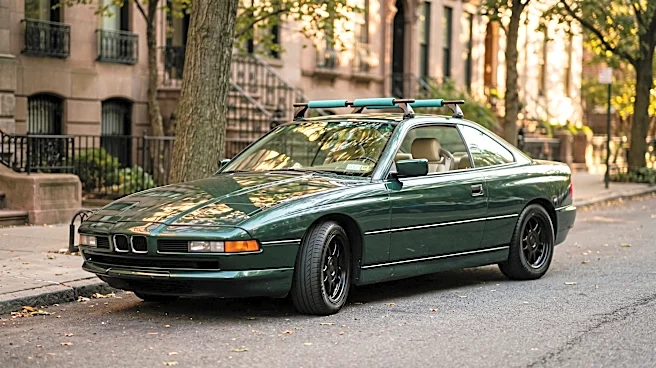
John F. Kennedy Jr.'s personally owned 1994 Saab 900 SE three-door coupe, which was his last automobile, is being documented for auction. Kennedy purchased the dark green Saab with a light beige leather interior and manual transmission in the summer of
1994 for $29,841.21 from Zumbach Sports Cars in Manhattan. The car, equipped with a CD player and phone hookup, reflected Kennedy's understated style, contrasting with the ostentation his wealth could have afforded. It was a frequent backdrop to his final years, often photographed with him and Carolyn Bessette-Kennedy navigating paparazzi in New York. The Saab's distinctive turquoise-padded roof rack was even recreated for the 2026 television series 'Love Story: John F. Kennedy Jr. & Carolyn Bessette.' The car's odometer reads 30,650 miles, and it shows signs of age and use. Following Kennedy's death in a plane crash on July 16, 1999, the Saab became part of his estate. It was subsequently sold to his friend Kevin J. Hynes in 2000 for $6,000, with extensive documentation confirming the transfer from the Estate of John Kennedy, Jr. to Hynes.
Why It's Important?
The documentation and potential auction of John F. Kennedy Jr.'s 1994 Saab 900 SE Coupe holds significant cultural and historical importance, particularly for collectors and enthusiasts of American history. As the last car owned by a prominent figure from one of America's most famous political families, the vehicle offers a tangible connection to his personal life and the era in which he lived. The car's modest nature, despite Kennedy's background, provides insight into his personal character and preferences, reinforcing his image as someone who eschewed overt displays of wealth. The extensive documentation, including the certificate of origin, insurance cards, registration, and letters of transfer from his estate, authenticates its provenance and adds to its historical value. This item serves as a unique artifact, offering a glimpse into the everyday life of a public figure whose life was intensely scrutinized. Its sale would likely attract considerable attention, reflecting the enduring fascination with the Kennedy family and their personal effects.
What's Next?
The article indicates that the car is being documented, suggesting preparation for a future auction. While no specific auction date or venue is provided, the detailed description and emphasis on its provenance imply that it will eventually be offered for sale to collectors. The inclusion of personal items found in the car after Kennedy's death, such as a football, soccer ball, and a March 1999 issue of Rolling Stone, further enhances its appeal as a historical artifact. These items, some of which have already appeared at auction, provide additional context to Kennedy's life. The car's journey from Kennedy's ownership to his friend Kevin Hynes, and then to Michael Esposito in 2006, is meticulously documented, ensuring its authenticity for any future buyer. The eventual sale of this vehicle will likely be a high-profile event, drawing considerable media attention and potentially fetching a significant price due to its unique historical connection.
Beyond the Headlines
Beyond its monetary value as a collector's item, John F. Kennedy Jr.'s Saab symbolizes a broader narrative about celebrity, privacy, and the public's enduring fascination with iconic figures. The car, frequently photographed with Kennedy, became an unwitting participant in the visual chronicle of his life, particularly during his final years. Its presence in numerous paparazzi shots highlights the constant public gaze on his life and the challenges he faced in maintaining a degree of normalcy. The fact that a seemingly ordinary car can become a significant historical artifact underscores how personal possessions of public figures can transcend their utilitarian purpose and become imbued with historical and emotional resonance. This phenomenon reflects a cultural tendency to seek tangible connections to historical moments and individuals, transforming everyday objects into relics that offer a perceived intimacy with the past. The car's story also subtly touches on the tragic end of Kennedy's life, serving as a poignant reminder of his untimely death.