





What's Happening?
Atom Computing, a company specializing in quantum computers built with optically trapped neutral atoms, is significantly scaling its manufacturing organization. The company is actively developing new processes, tooling, and quality controls to ensure
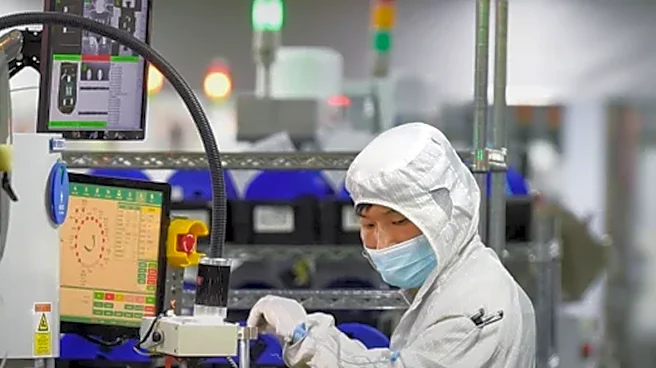
reliable hardware production for its complex quantum systems. As part of this expansion, Atom Computing is seeking a Vacuum/Mechanical Engineer to establish manufacturing processes for precision mechanical and vacuum assemblies. This role involves developing controlled procedures for hardware preparation, assembly, cleaning, handling, sealing, and fastening of critical surfaces. The engineer will also be responsible for establishing pumping, leak testing, and bakeout procedures, as well as investigating issues like leaks and contamination. The company emphasizes the low-volume, high-complexity nature of its quantum computers, requiring meticulous attention to detail in manufacturing. The new hire will be crucial in translating engineering requirements into repeatable production methods and training the build team.
Why It's Important?
This expansion by Atom Computing signifies a critical phase in the advancement of quantum computing technology. By focusing on scaling manufacturing and refining production processes, the company is moving beyond theoretical development towards practical, repeatable hardware production. This is vital for the broader quantum computing industry, as the ability to reliably produce complex quantum systems is a prerequisite for wider adoption and commercialization. The development of robust manufacturing processes will directly impact the performance, reliability, and eventual accessibility of quantum computers. Furthermore, the investment in specialized engineering roles like a Vacuum/Mechanical Engineer highlights the intricate challenges involved in building these cutting-edge machines, particularly concerning ultra-high vacuum environments and precision mechanical integration. Success in these areas could accelerate breakthroughs in various fields that rely on advanced computational power, from drug discovery to materials science.
What's Next?
Atom Computing's immediate next steps involve filling key manufacturing roles, such as the Vacuum/Mechanical Engineer position, to bolster its production capabilities. The company will focus on implementing and refining the new manufacturing processes, tooling, and quality controls. This will include defining workstations, equipment, and assembly procedures, followed by qualifying cleaning, assembly, and leak test steps. Training the build team in these approved methods will be a crucial subsequent phase. Successful execution of these manufacturing scaling efforts will enable Atom Computing to produce more quantum computing hardware, potentially leading to larger and more powerful quantum systems. This could also pave the way for increased research and development, as well as potential partnerships or commercial offerings as the technology matures and becomes more stable.
Beyond the Headlines
The push by Atom Computing to scale its manufacturing operations underscores a broader trend in the quantum computing sector: the transition from pure research to industrial-scale production. This shift brings forth significant engineering challenges, particularly in areas like materials science, vacuum technology, and precision manufacturing, which are often overlooked in the initial excitement surrounding quantum algorithms. The need for highly specialized engineers to tackle these practical hurdles highlights the interdisciplinary nature of quantum technology development. Furthermore, the emphasis on 'reliable hardware production' points to the growing maturity of the field, where consistency and quality are becoming as important as theoretical breakthroughs. This industrialization phase will likely drive innovation in related manufacturing technologies and supply chains, creating new economic opportunities and fostering a specialized workforce capable of building the next generation of computing infrastructure.