



What's Happening?
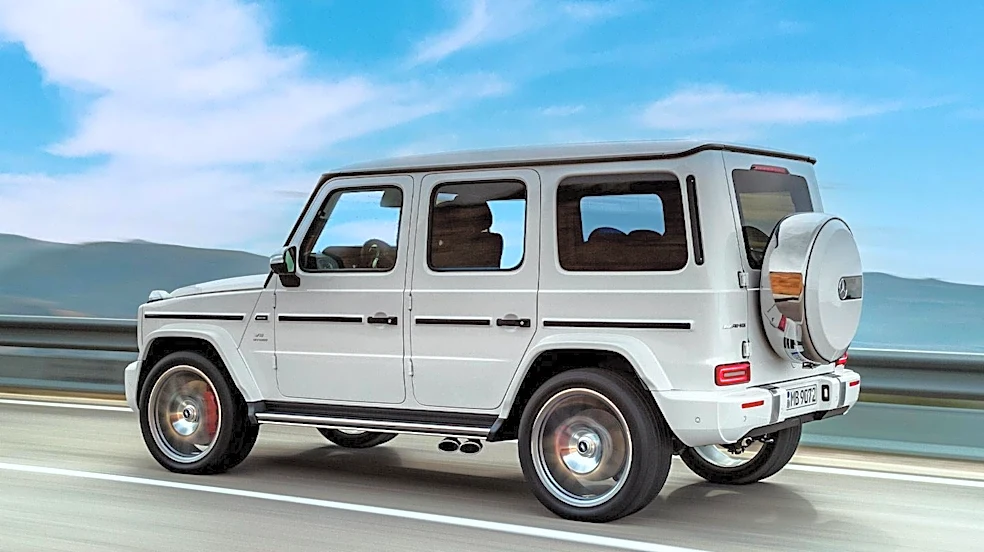
Mercedes-Benz executives have confirmed that the upcoming smaller version of the G-Class, often referred to as the 'Baby G-Class,' will be significantly different from its larger, iconic predecessor. Speaking at the company's 140 Festival in Stuttgart,
Mercedes-AMG CEO Stefan Weckbach stated that the new off-roader will target a distinct audience and segment, rather than directly appealing to existing G-Class customers. While it will inherit some 'family genes' and DNA from the original G-Wagen, the smaller model is not intended to be a mere scaled-down replica. Mercedes-Benz CEO Ola Källenius emphasized the unique off-road capabilities of the original G-Class, citing its ability to descend challenging terrains at high speeds. The 'Baby G-Class' is expected to offer very good off-road capability and will be available with both combustion and electric powertrains, with its arrival anticipated within the next 24 months.
Why It's Important?
This strategic decision by Mercedes-Benz to differentiate the 'Baby G-Class' is crucial for expanding its market reach and avoiding cannibalization of its highly successful G-Class sales. By targeting a different segment, Mercedes aims to attract new customers who may desire the G-Class aesthetic and off-road prowess but in a more compact, potentially more urban-friendly, or more affordable package. This approach allows the brand to leverage the strong heritage and brand recognition of the G-Class while innovating for future market demands, including the growing preference for electric vehicles. The introduction of both combustion and electric powertrains for the 'Baby G-Class' reflects Mercedes' commitment to offering diverse options to consumers, catering to varying preferences and regulatory environments. This move could significantly impact the competitive landscape of the compact luxury SUV market, potentially drawing in buyers from other premium brands.
What's Next?
The 'Baby G-Class' is expected to be launched within the next two years, with more details regarding its design, features, and pricing likely to emerge as its release date approaches. Mercedes-Benz will need to carefully balance the new model's distinct identity with its connection to the revered G-Class lineage to ensure market acceptance. The company will also need to clearly articulate the target audience and unique selling propositions of the 'Baby G-Class' to avoid confusion among consumers. The success of this new model will be a key indicator of Mercedes-Benz's ability to adapt its iconic brands to evolving consumer tastes and the shift towards electrification, while maintaining its luxury appeal and performance standards.
Beyond the Headlines
The strategy behind the 'Baby G-Class' reflects a broader trend in the automotive industry where luxury brands are seeking to extend their iconic nameplates into new, often smaller and more accessible, segments. This approach aims to capitalize on brand equity while addressing market shifts towards compact vehicles and diverse powertrain options. The challenge lies in maintaining the essence and prestige of the original model while adapting it for a new context. For Mercedes-Benz, this involves translating the rugged, go-anywhere spirit of the G-Class into a package that appeals to a different demographic without diluting the brand's core values. The decision to offer both combustion and electric variants also highlights the ongoing transition in the automotive sector, where manufacturers are navigating the complexities of phasing out traditional engines while embracing electric mobility.