




What's Happening?
A 1965 Ferrari 275 GTS Spider, originally driven by actress Raquel Welch in the 1966 film "Fathom" and subsequently gifted to her, continues to hold substantial value in the classic car market. The film, a spy-spoof that cost $2.2 million to produce,
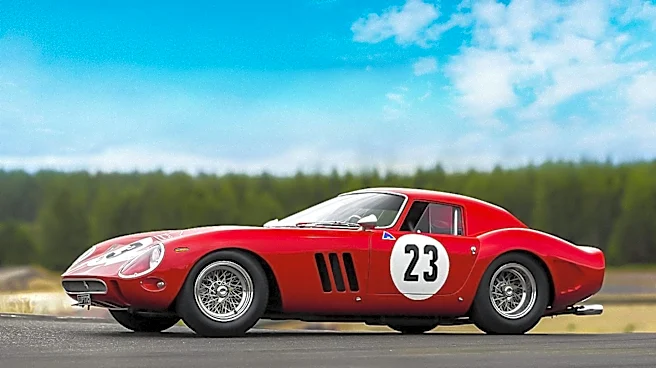
only grossed about $1 million in North American theaters. Despite the movie's commercial failure and obscurity, the Ferrari, chassis 07359, became a personal gift to Welch after filming concluded in Spain. This was an unusual occurrence, as such high-value assets are typically leased or loaned for film productions today, with strict contractual agreements. The 275 GTS model itself was significant for Ferrari, being among the first road cars to feature a rear-mounted transaxle and independent suspension on all four wheels. Only 200 units of this Pininfarina-designed, all-steel spider were built between late 1964 and early 1966, powered by a 3.3-liter Colombo V12 engine.
Why It's Important?
The story of Raquel Welch's Ferrari highlights a significant shift in Hollywood's approach to valuable props and celebrity compensation. In the 1960s, a lead actor could receive a high-value car as a gift, a practice virtually unheard of in modern film production due to stringent insurance policies, tax implications, and the structured nature of product placement. Today, exotic cars in films are almost always tracked, insured assets, leased, or loaned by manufacturers for promotional purposes. This change reflects the increased financial and legal complexities of the entertainment industry. Furthermore, Welch's ownership adds a unique provenance to this particular 275 GTS, enhancing its appeal and value in the collector's market. A similar 1965 275 GTS without celebrity history sold for over $1.5 million in 2023, underscoring the model's inherent value, which is further amplified by its connection to a cultural icon.
What's Next?
The market for vintage Ferraris, particularly rare models with unique histories like Welch's 275 GTS, is expected to remain robust. Collectors and enthusiasts will continue to seek out vehicles with documented provenance and mechanical significance. For current owners of such classic cars, the ongoing appreciation in value necessitates specialized insurance policies, such as agreed-value classic car insurance, to protect their investment adequately. The scarcity of specialists capable of maintaining these complex vehicles, like those familiar with old Colombo V12 engines and their six Weber carburetors, will likely lead to increasing labor rates for their services. The need for authentic parts, often requiring fabrication or sourcing through marque specialists, will also continue to be a significant factor in the cost and effort of ownership.
Beyond the Headlines
The narrative surrounding Raquel Welch's Ferrari extends beyond mere financial value, touching upon the cultural and historical aspects of celebrity and luxury goods. It illustrates a bygone era where personal relationships and informal gestures could result in the transfer of highly valuable assets, a stark contrast to the highly formalized and legally scrutinized transactions of today. The car itself, a symbol of automotive engineering innovation for its time, has outlasted the memory of the film it appeared in, becoming a more enduring legacy than the movie itself. This phenomenon underscores how certain objects, imbued with historical context and celebrity association, can transcend their original purpose and become artifacts of cultural significance, appreciated for their story as much as their intrinsic qualities. The challenges of maintaining such a vehicle also highlight the dedication and resources required to preserve automotive history.