






What's Happening?
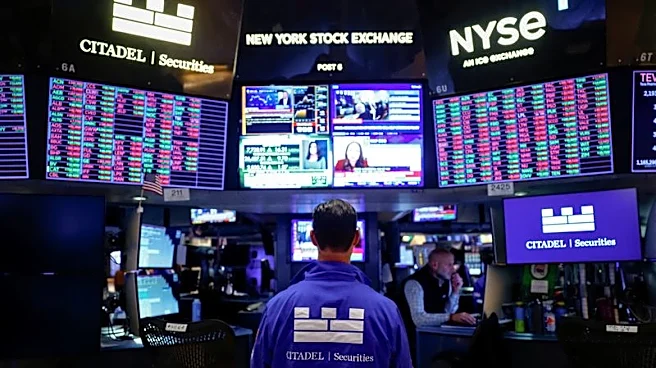
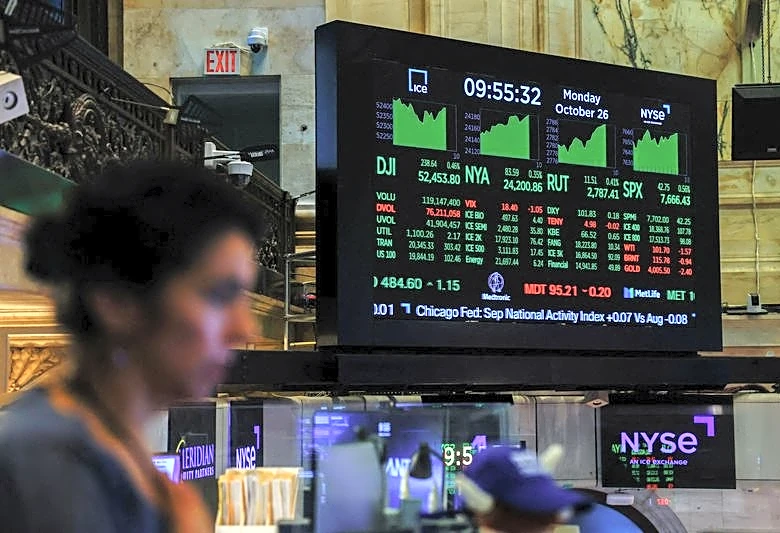
The Nasdaq Composite index fell by 2.9% on October 30, as technology earnings reports intensified scrutiny on the returns from significant artificial intelligence (AI) investments. While companies like Alphabet reported strong cloud growth and Amazon's
AWS sales increased, capital expenditures, largely driven by AI investments, led to substantial free cash flow outflows. For instance, Alphabet's quarterly free cash flow saw a $9.1 billion outflow, and Amazon's group free cash flow swung to a $42.4 billion outflow over twelve months. This trend has prompted questions about how these expansions are financed and how financial institutions and equipment suppliers share the associated exposure. Concurrently, the Federal Reserve maintained its target range at 3.75%–4% on October 28, following a previous quarter-point increase, with two members advocating for further tightening. The European Central Bank (ECB) also held its rates unchanged, while the Bank of Canada raised its overnight rate by 25 basis points to 2.5%.
Why It's Important?
The Nasdaq's decline and the scrutiny on AI investment returns are significant for the U.S. technology sector and broader economy. The substantial capital outflows from major tech companies, despite revenue growth, indicate that the high costs of AI development and infrastructure are impacting profitability and cash flow. This could lead to a re-evaluation of investment strategies within the tech industry and potentially affect investor confidence in AI-driven growth. For U.S. financial markets, the Federal Reserve's decision to hold rates, while some members pushed for further tightening, reflects ongoing concerns about inflation and economic conditions. The divergence in monetary policy among central banks (Fed and ECB holding, Bank of Canada hiking) highlights varying economic pressures and policy responses globally, which can influence currency exchange rates, trade balances, and capital flows, impacting U.S. businesses and consumers.
What's Next?
The coming weeks will see further assessment of technology demand and AI returns, with major U.S. companies like Apple and Palantir scheduled to report earnings on November 2. The ISM manufacturing PMI and ISM services PMI, along with the October employment report, will also provide crucial insights into the U.S. economic trajectory and potential implications for Federal Reserve policy. The ongoing debate within the Fed regarding future rate hikes suggests that monetary policy remains a key variable. For the tech sector, the focus will be on whether companies can demonstrate a clearer path to profitability from their AI investments. The broader financial market will continue to monitor energy prices, as rising costs could complicate monetary policy decisions by potentially fueling inflation, as noted by the Bank of Canada's Governor Tiff Macklem.
Beyond the Headlines
The current situation in the tech sector, characterized by massive AI investments and scrutinizing returns, points to a potential shift in the venture capital and investment landscape. The initial euphoria surrounding AI might be giving way to a more pragmatic assessment of its financial viability and long-term profitability. This could lead to a more disciplined approach to funding AI startups and projects, favoring those with clear business models and demonstrable returns. Furthermore, the interplay between technological advancements, corporate spending, and central bank policies highlights the complex dynamics of the modern economy. The challenge for policymakers is to manage inflation and economic growth while navigating the disruptive and transformative potential of technologies like AI, which can have both inflationary pressures (due to high investment costs) and deflationary effects (due to increased efficiency) in the long run.