



What's Happening?
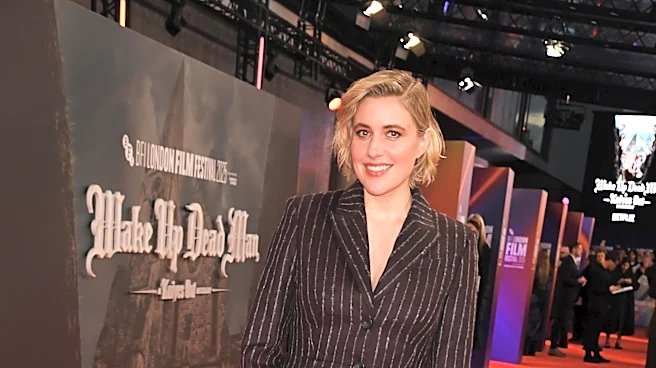
Greta Gerwig is directing an upcoming Netflix adaptation of 'Narnia: The Magician’s Nephew,' which has generated significant online controversy. This project follows her highly successful film 'Barbie.' Malcolm Guite, a scholar of C.S. Lewis, has weighed
in on the debate, noting that many Christians have 'rushed to judgment' based on early previews like trailers. Guite revealed that he had conversations with Gerwig during the early stages of the project, offering her advice to 'trust the story.' He also defended her intentions, stating that she 'loves Lewis and she loves these stories,' suggesting a genuine respect for the source material despite public apprehension.
Why It's Important?
The controversy surrounding Greta Gerwig's 'Narnia' adaptation highlights the challenges inherent in reinterpreting classic and beloved literary works, particularly those with strong cultural and spiritual resonance. C.S. Lewis's 'Narnia' series holds deep significance for many, and any deviation from perceived fidelity to the original text or its underlying themes can provoke strong reactions from fans. This situation underscores the delicate balance filmmakers must strike between artistic vision and audience expectations, especially when dealing with established intellectual properties. The public's immediate and often vocal response to trailers and early announcements can significantly influence a project's narrative even before its release, impacting its potential reception and commercial success. The involvement of a respected scholar like Malcolm Guite in defending Gerwig's approach also emphasizes the intellectual and cultural stakes involved in such adaptations.
What's Next?
The release of Greta Gerwig's 'Narnia: The Magician’s Nephew' on Netflix will be a critical moment for the project, as it will finally allow audiences to evaluate the adaptation beyond initial trailers and speculation. The reception of the series will likely be closely scrutinized by both fans of the original books and the broader entertainment industry. Its success or failure could set precedents for how other classic literary works are approached for modern adaptations, particularly on streaming platforms. For Gerwig, this project represents a significant follow-up to her 'Barbie' success, and its outcome will further define her versatility and ability to navigate diverse genres and fan expectations. The ongoing dialogue between creators, scholars, and the public regarding the interpretation of classic stories is expected to continue.
Beyond the Headlines
The debate over Greta Gerwig's 'Narnia' adaptation extends beyond mere cinematic preferences, touching upon deeper questions of cultural ownership, artistic license, and the interpretation of foundational narratives. For many, C.S. Lewis's 'Narnia' is not just a fantasy series but a work imbued with spiritual and moral lessons. Any perceived alteration or modernization can be seen as a challenge to these deeply held values. This phenomenon is common with adaptations of revered texts, where the original work has become a part of collective memory and identity. The controversy reflects a broader societal discussion about how new generations engage with and reinterpret classic stories, and the tension between preserving tradition and fostering creative evolution in storytelling. It also highlights the power of online platforms to amplify both support and criticism, shaping public discourse around major cultural projects.