





What's Happening?
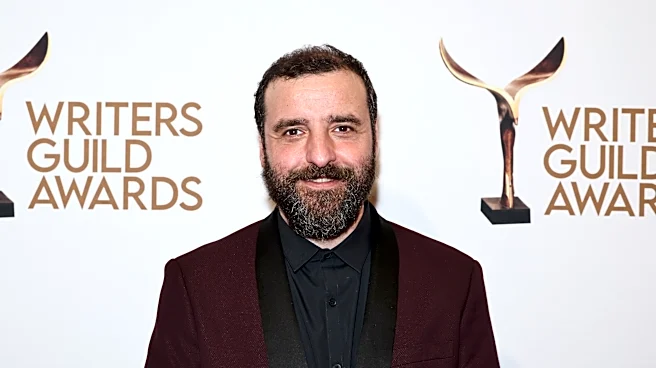
David Krumholtz, known for his roles in 'Oppenheimer' and 'Supergirl,' has declared an indefinite break from professional acting after 34 years in the industry. The 48-year-old actor expressed his frustration, stating that the profession has 'lost its
gleam' and that he feels 'fed up' and 'fried.' Krumholtz announced his decision in a series of social media posts, some of which were later deleted, but he clarified that he is 'not quitting entirely' and remains interested in acting, just not under the current industry terms. He recently appeared as Zor-El in DC Studios' 'Supergirl' and as physicist Isidor Isaac Rabi in Christopher Nolan's 'Oppenheimer.' Despite his break from actively seeking new roles, Krumholtz has already completed or announced films, including 'Mr. Irrelevant: The John Tuggle Story' and 'Bullet Catch,' which are still slated for release.
Why It's Important?
Krumholtz's decision highlights a growing sentiment among established actors regarding the changing economic landscape and professional expectations within Hollywood. His critique of 'exploitative art' and the demand for actors to 'brand' themselves on social media for smaller financial returns points to a significant shift in the industry's business model. This trend could lead to a reevaluation of compensation structures and the role of social media in an actor's career. If more experienced actors follow suit, it could impact the talent pool available for traditional film and television productions, potentially pushing the industry to address concerns about fair compensation and the pressure to maintain a digital presence. The situation underscores a broader debate about the value of artistic labor in an increasingly corporatized entertainment world.
What's Next?
While Krumholtz is taking an indefinite break from actively pursuing new acting jobs, his existing projects, 'Mr. Irrelevant: The John Tuggle Story' and 'Bullet Catch,' are still expected to be released. He has expressed an openness to acting roles that offer meaningful work, suggesting a potential shift in his criteria for accepting projects. Krumholtz also mentioned exploring other avenues, such as motivational speaking for schoolchildren, indicating a desire to find more rewarding pursuits outside the traditional acting grind. His public statements may encourage other actors to voice similar concerns, potentially leading to industry-wide discussions about fair practices and the evolving demands placed on performers in the digital age.
Beyond the Headlines
Krumholtz's candid remarks delve into the ethical and cultural dimensions of the modern entertainment industry. His lament that 'the profession has lost its gleam' speaks to a perceived erosion of artistic integrity and a shift towards a more commercialized, brand-driven approach. The expectation for actors to constantly market themselves on social media, rather than solely focusing on their craft, raises questions about authenticity and the pressure to conform to digital trends. This development could lead to a long-term redefinition of what it means to be a 'working actor' in Hollywood, potentially fostering a divide between those willing to embrace the new demands and those who, like Krumholtz, seek a more traditional and artistically fulfilling path.