





What's Happening?
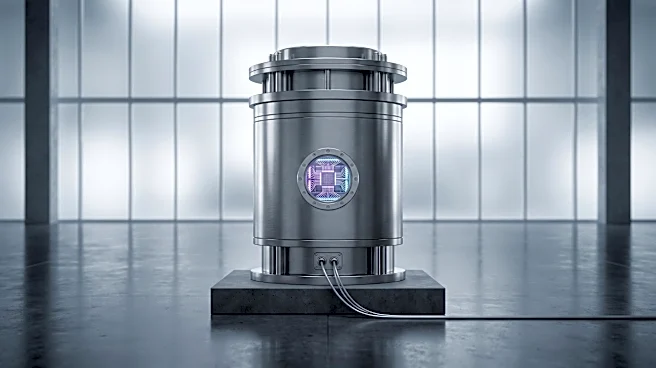
Rogers Corporation, a global manufacturer of engineered materials, has announced a strategic plan to achieve over $1.5 billion in annual sales by 2030. This growth is projected to come from both its core markets and new opportunities in AI data centers,
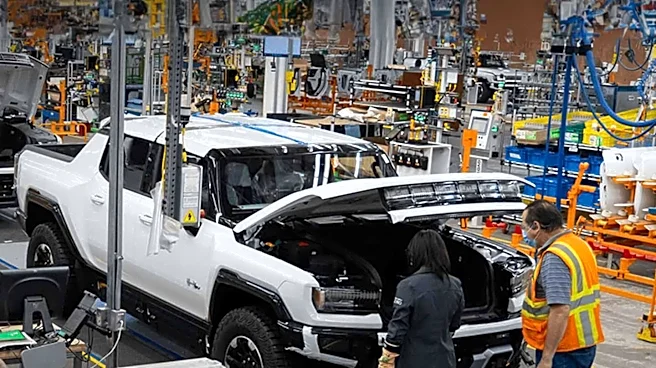
battery systems, and electromagnetic interference (EMI) shielding. President and CEO Ali El-Haj stated that the company aims to become a “leaner, faster, and higher growth company.” The core markets, including aerospace and defense, automotive, industrial, and electronics and communications, are expected to grow at an annual rate of approximately 5% through 2030. Specifically, aerospace and defense is anticipated to lead with high-single-digit growth, while automotive and industrial are forecast for mid-single-digit growth. Electronics and communications are expected to see low-single-digit growth, with gains in premium smartphones and consumer electronics partially offset by flat or declining wireless-infrastructure demand. New adjacencies, such as data centers, battery systems, and EMI shielding, are expected to contribute more than $450 million in annual revenue by 2030, with data centers representing the largest of these opportunities.
Why It's Important?
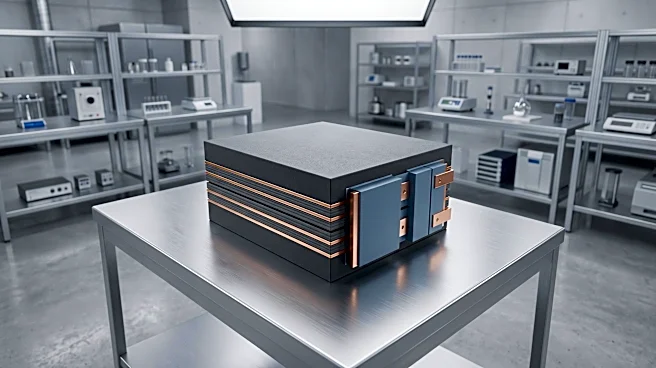
This strategic growth plan by Rogers Corporation is significant for the U.S. technology and manufacturing sectors, particularly in the context of advancing AI infrastructure and electric vehicle (EV) technologies. The company's focus on high-speed digital materials for AI data centers addresses critical challenges in maintaining signal integrity and managing heat in increasingly powerful AI chips. As AI development accelerates, the demand for such specialized materials will likely surge, positioning Rogers Corporation as a key enabler of next-generation computing. Furthermore, the company's expansion into thermal runaway protection for EV and stationary energy-storage batteries is crucial for enhancing battery safety and performance, which are vital for the widespread adoption of EVs and renewable energy storage solutions. The development of electrically conductive elastomers for EMI shielding also has broad implications for various industries, including EVs, aerospace, and defense, by protecting sensitive electronic systems from interference. This growth strategy underscores the increasing reliance on advanced material science to support technological innovation and infrastructure development in the U.S. and globally.
What's Next?
Rogers Corporation anticipates that major industry participants will begin testing its low-loss circuit materials, with design awards expected to generate revenue in the second half of 2027. The company is also actively prototyping microchannel cooling products with multiple customers, indicating a near-term focus on bringing these innovations to market. For its Elastomeric Material Solutions (EMS) segment, Rogers is targeting thermal runaway protection for electric vehicle and stationary energy-storage batteries, building on its existing supply of pressure-management materials to major EV manufacturers. The company plans to combine these capabilities with materials designed to limit thermal-event propagation. Additionally, EMS is pursuing EMI-shielding opportunities through electrically conductive elastomers, with potential applications spanning EVs, battery energy-storage systems, aerospace and defense equipment, and satellite systems. Financially, Rogers expects its revenue growth and operating improvements to drive significant earnings expansion, targeting 13% annual revenue growth, 26% adjusted EBITDA margin, and $14 in adjusted earnings per share by 2030. The company also plans to prioritize organic investment, consider strategic acquisitions, maintain financial flexibility, and return excess capital to shareholders.
Beyond the Headlines
The strategic direction of Rogers Corporation highlights a broader trend in the U.S. industrial landscape: the increasing specialization and critical importance of advanced materials in driving technological progress. The company's emphasis on materials for AI data centers and battery systems reflects the foundational role that material science plays in overcoming physical limitations in computing power and energy storage. This focus also points to the intricate supply chains and interdependencies within the tech industry, where the performance of cutting-edge hardware is often dictated by the properties of the underlying materials. The ethical implications of these advancements include ensuring the sustainability of material sourcing and manufacturing processes, especially given the growing demand for high-performance components. Furthermore, the long-term shift towards more powerful AI and widespread EV adoption will necessitate continuous innovation in materials to address challenges such as energy efficiency, safety, and durability. Rogers Corporation's strategy positions it at the nexus of these critical technological shifts, underscoring the quiet but profound impact of material engineering on the future of U.S. industry and beyond.