




What's Happening?
Beam Global and Masdar City Free Zone have signed a Memorandum of Understanding (MOU) to explore opportunities for sustainable energy infrastructure. This collaboration aims to advance sustainable mobility and clean-energy innovation across the United
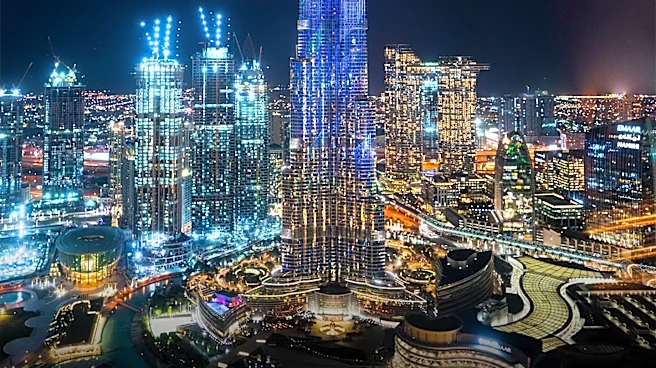
Arab Emirates (UAE). Beam Middle East, licensed through Masdar City Free Zone, will introduce advanced energy systems for potential application within the ecosystem. These systems include off-grid electric vehicle (EV) charging infrastructure, solar-integrated e-bike solutions, and other clean-energy mobility technologies. The partnership aligns with the UAE’s ambition to become a global leader in renewable energy and climate-positive development. The agreement comes at a time when Gulf Cooperation Council (GCC) countries are targeting trillion-dollar green investments and economic transformations. Masdar City, a global benchmark for sustainable urban innovation, will integrate Beam Global into its Free Zone ecosystem, particularly within the Smart and Autonomous Vehicle Industries (SAVI) cluster. This cluster, established at Masdar City, aims to position Abu Dhabi as a leading hub for advanced transportation by providing a progressive regulatory framework and green infrastructure to accelerate the evaluation and commercialization of smart transit solutions. The collaboration will explore how off-grid energy and e-mobility systems can support cleaner, more resilient urban infrastructure.
Why It's Important?
This partnership is significant as it directly supports the UAE's strategic goals for renewable energy and climate-positive development, including its Net Zero by 2050 Strategy. By integrating advanced sustainable mobility and clean-energy solutions, the collaboration can serve as a model for other regions aiming to decarbonize their transportation and urban infrastructure. The focus on off-grid EV charging and solar-integrated e-bike solutions addresses critical needs for expanding access to sustainable transportation and reducing emissions, particularly in rapidly developing urban environments. The involvement of Masdar City's SAVI cluster highlights a commitment to fostering innovation in smart and autonomous vehicle technologies, which could lead to scalable solutions for global urban centers. For U.S. companies in the sustainable energy and mobility sectors, this initiative demonstrates a growing international market for their technologies and expertise, potentially opening doors for future collaborations and export opportunities. The success of such projects in the UAE could also influence policy and investment decisions in other countries, accelerating the global transition to cleaner energy and transportation systems.
What's Next?
Following the signing of the MOU, Beam Middle East will proceed with introducing and supplying its advanced energy systems for potential application within Masdar City's ecosystem. The focus will be on deploying off-grid EV charging infrastructure, solar-integrated e-bike solutions, and other clean-energy mobility technologies. The Masdar City Free Zone, particularly its SAVI cluster, will evaluate how these innovative solutions can contribute to cleaner and smarter urban environments across the UAE and potentially beyond. The collaboration is expected to support the UAE's broader sustainability agenda and its Net Zero by 2050 Strategy, which provides a framework for decarbonization across key sectors like power, industry, transport, and buildings. This will likely involve pilot projects and demonstrations to assess the effectiveness and scalability of Beam Global's technologies within the specific context of the UAE's urban development and climate goals. The outcomes of these evaluations could lead to wider adoption of these sustainable energy solutions across the region and potentially influence international best practices in urban sustainability.
Beyond the Headlines
This partnership extends beyond immediate technological deployment, touching upon broader implications for urban planning, energy independence, and international climate cooperation. The emphasis on off-grid solutions suggests a strategic move towards decentralized energy systems, enhancing resilience and reducing reliance on traditional grid infrastructure, which can be particularly beneficial in regions prone to energy supply challenges. Ethically, the collaboration underscores a commitment to reducing carbon footprints and improving air quality in urban areas, contributing to public health and environmental stewardship. Culturally, the adoption of e-bikes and off-grid EV charging could foster a shift in transportation habits, promoting more sustainable lifestyles among residents. Furthermore, the UAE's role as a global leader in renewable energy and climate-positive development, as highlighted by this MOU, positions it as a significant player in shaping international climate policy and technological standards. This could lead to increased knowledge sharing and collaborative research between the UAE and other nations, including the U.S., on advanced sustainable technologies and urban development models.