





What's Happening?
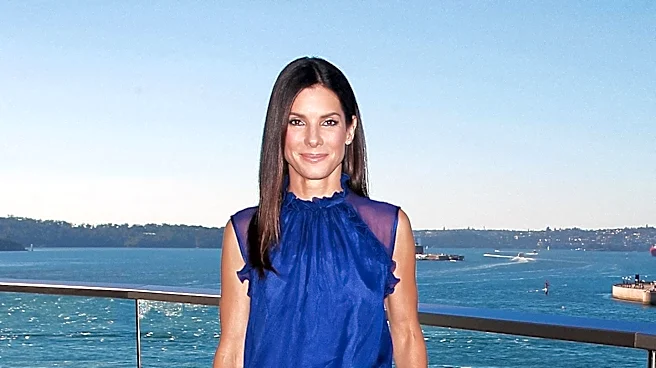
Actress Sandra Bullock has publicly spoken for the first time about her late partner Bryan Randall's three-year battle with Amyotrophic Lateral Sclerosis (ALS). Randall passed away in August 2023 at the age of 57. Bullock revealed in a podcast that Randall requested
she keep his illness private, a decision she honored, leading to significant isolation for her. She shared that only her sister, Gesine Bullock-Prado, initially knew about Randall's condition, and she couldn't even confide in close friends. The period of Randall's illness coincided with the COVID-19 pandemic, intensifying the challenges Bullock faced while caring for him and raising her children. She described this time as a 'triple darkness' and a 'traumatic' experience, noting that her grieving process began long before Randall's death as the disease progressively diminished the person she knew. Bullock stated that her partner 'left much earlier than his body did.'
Why It's Important?
This personal account from a prominent public figure like Sandra Bullock sheds light on the profound and often hidden struggles faced by caregivers of individuals with debilitating illnesses like ALS. Her experience highlights the immense emotional and psychological toll of maintaining privacy around a severe health condition, particularly when the patient requests it. The isolation Bullock described underscores a broader issue for many caregivers who may feel unable to share their burdens, leading to mental health challenges. Furthermore, her narrative brings attention to ALS, a progressive neurodegenerative disease that gradually robs individuals of muscle control, emphasizing the devastating impact it has not only on patients but also on their loved ones. Bullock's decision to share her story, even years after Randall's passing, could foster greater empathy and understanding for those navigating similar private battles, potentially encouraging more open conversations about caregiver support and the realities of chronic illness.
What's Next?
Following Randall's death, Bullock took a hiatus from acting to focus on her children and process her grief. She has since returned to movies with 'Practical Magic 2.' Her public discussion of Randall's illness may prompt further conversations about ALS awareness and the importance of support systems for caregivers. While Bullock's immediate focus appears to be on her family and career, her candidness could inspire other public figures or individuals to share their experiences, contributing to a broader dialogue about the challenges of chronic illness and caregiving. Organizations dedicated to ALS research and patient support might also leverage her story to raise awareness and funding for the disease. The long-term impact could be a subtle shift in how public figures manage personal health crises, potentially leading to more transparency and advocacy.
Beyond the Headlines
Bullock's revelation touches upon the ethical considerations surrounding privacy in illness, especially for public figures. Randall's wish for privacy, while respected by Bullock, inadvertently created an isolating environment for her, highlighting the delicate balance between a patient's autonomy and a caregiver's need for support. This situation also underscores the societal pressure on public figures to maintain a certain image, which can complicate their ability to seek help during personal crises. The 'triple darkness' Bullock described, combining a severe illness, the pandemic, and enforced secrecy, illustrates a unique confluence of stressors that can exacerbate mental health struggles. Her story serves as a poignant reminder of the hidden sacrifices and emotional labor involved in caregiving, urging a deeper societal reflection on how communities and healthcare systems can better support those who care for the terminally ill, regardless of their public status.