




What's Happening?
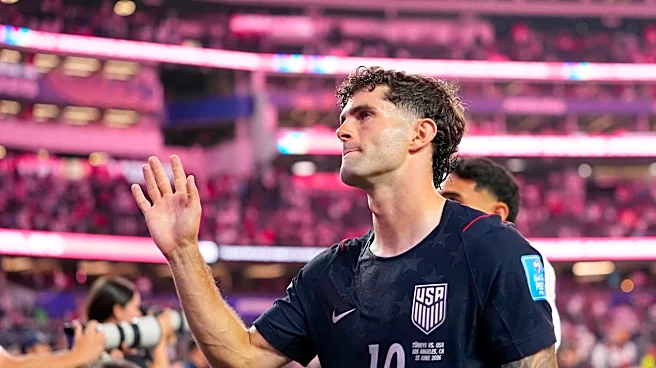
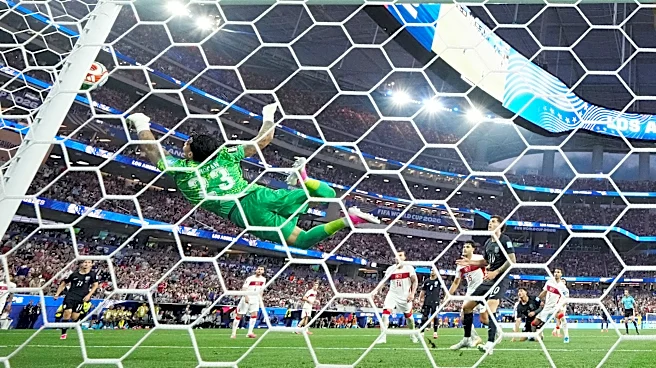
The U.S. men's national soccer team's World Cup match against Turkiye drew a significant number of celebrities to the stands, showcasing the growing appeal of soccer in the United States. Notable figures such as Brad Pitt, Ed Norton, Leonardo DiCaprio,
and Will Ferrell were among the attendees at the SoFi Stadium in Inglewood, California. The event also saw the presence of sports icons like Scottie Pippen and Dwayne Wade, as well as entertainment personalities including Gabrielle Union, Paris Hilton, and Ashton Kutcher. The match provided a platform for these celebrities to engage with the sport, with some, like Will Ferrell, using the opportunity to promote upcoming projects. The presence of such high-profile individuals underscores the increasing cultural significance of soccer in the U.S., as it continues to attract attention from various sectors of society.
Why It's Important?
The attendance of numerous celebrities at the USMNT's World Cup match highlights the sport's rising prominence in the United States, a country traditionally dominated by sports like American football, basketball, and baseball. This shift indicates a broader acceptance and enthusiasm for soccer, potentially leading to increased investment in the sport at both grassroots and professional levels. The presence of influential figures can also drive media coverage and public interest, further boosting the sport's profile. For the U.S. Soccer Federation, this growing attention could translate into higher viewership, sponsorship opportunities, and a stronger fan base, ultimately contributing to the development of soccer infrastructure and talent in the country.
What's Next?
As soccer continues to gain traction in the U.S., stakeholders in the sport may look to capitalize on this momentum by enhancing marketing strategies and expanding outreach efforts to engage new fans. The U.S. Soccer Federation might also focus on leveraging celebrity endorsements and partnerships to further elevate the sport's visibility. Additionally, with the 2026 FIFA World Cup set to be hosted in North America, including the U.S., there is an opportunity to build on this growing interest and ensure a successful tournament that could leave a lasting legacy for soccer in the region.