
What's Happening?
Minnesota United FC has completed its tenth season in Major League Soccer, marked by significant changes in both leadership and on-field tactics. The club experienced a comprehensive overhaul, with Christina
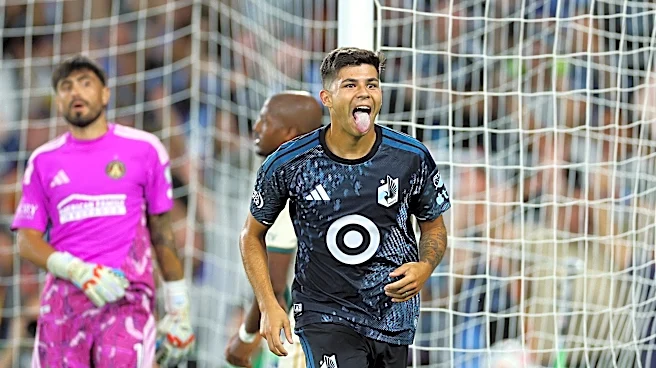
Hennington stepping in as the new CEO, a search for a new Sporting Director underway, and Cameron Knowles completing his first full season as head coach. This period saw familiar leaders depart and new ones assume critical roles. Tactically, the team transitioned from a defensive-oriented style under the previous coach to a more 'front-foot oriented' approach under Coach Knowles. This involved extensive experimentation with formations, including variations of 3-4-2-1, 5-4-1, and 5-2-3, before ultimately settling on a 4-4-2 formation towards the end of the season. The emergence of young players like Marcus Caldeira and the tactical adjustments, particularly in the backline, led to a strong finish, including a seven-game unbeaten run.
Why It's Important?
The extensive changes at Minnesota United FC reflect a critical juncture for the club as it aims to solidify its competitive standing within MLS. The appointment of a new CEO and the ongoing search for a Sporting Director indicate a strategic effort to redefine the club's long-term vision and operational efficiency. On the field, the tactical evolution under Coach Knowles, though initially challenging, ultimately led to a more effective and dynamic style of play. This shift is crucial for fan engagement and competitive performance, as a more attacking and successful team can attract larger audiences and generate greater revenue. The development and integration of younger talent, such as Marcus Caldeira, also highlight a commitment to building a sustainable future for the club, reducing reliance on aging players and fostering a new generation of stars. The strong finish to the season, despite missing the playoffs by a single point, provides a foundation for optimism and future success.
What's Next?
Minnesota United FC is poised to build upon the tactical and leadership changes implemented during the past season. The club will continue its search for a new Sporting Director, a key position that will influence player recruitment and overall footballing philosophy. Coach Knowles will likely refine the 4-4-2 formation and further integrate the emerging young talent that proved effective late in the season. The strong performance in the final seven games, which included 17 goals scored and only nine conceded, suggests a positive trajectory for the upcoming season. The club's leadership will focus on translating this on-field momentum into consistent playoff contention and increased fan support. The 'season of change' is expected to transition into a period of consolidation and growth, with the aim of achieving sustained success in Major League Soccer.
Beyond the Headlines
The experience of Minnesota United FC underscores the inherent challenges and opportunities in managing a professional sports franchise. The simultaneous overhaul of leadership and playing style, while disruptive, can also be a catalyst for significant growth and innovation. The club's willingness to experiment tactically and integrate new talent reflects a forward-thinking approach that prioritizes long-term development over short-term fixes. This 'season of change' also highlights the resilience required in professional sports, where periods of uncertainty and frustration can ultimately lead to stronger foundations. The narrative of overcoming initial struggles to find a successful formula resonates beyond sports, offering insights into organizational adaptation and the importance of strategic leadership during transitions. The club's journey will be closely watched as a case study in how comprehensive change can reshape a team's identity and performance.