




What's Happening?
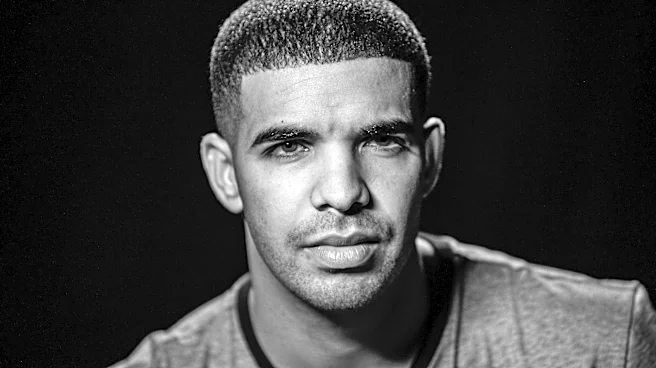
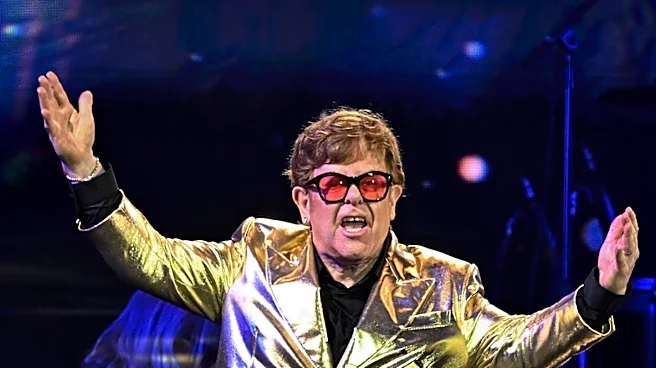
Public Enemy frontman Chuck D recently compared rapper Drake to Elton John, clarifying that the comparison was not an insult but rather an observation about their "popular relevance and cultural saturation." Chuck D made the initial statement on X on November
21, and subsequently provided a series of explanations. He emphasized that his point was not about musical style but about how widely their music travels beyond their initial audience. Chuck D highlighted Elton John's singing, piano playing, and co-written radio hits, and Drake's ability to create call-and-response moments in arenas where crowds know his songs well enough to join in. He recalled hearing Elton John's 'Your Song' and 'Philadelphia Freedom' on AM radio during his youth, noting their widespread appeal.
Why It's Important?
Chuck D's comparison offers a unique perspective on the cultural impact and longevity of artists across different genres and eras. By drawing parallels between Drake and Elton John based on their widespread appeal and ability to permeate mainstream culture, he underscores the idea that true musical influence extends beyond genre boundaries. This perspective challenges conventional notions of artistic merit and highlights the significance of an artist's reach and sustained presence in the public consciousness. For the music industry, it suggests that cultural saturation and popular relevance are key indicators of an artist's long-term success, potentially influencing how talent is identified, developed, and marketed. It also sparks a broader conversation about the evolution of music consumption and the metrics of success in a rapidly changing media landscape.
What's Next?
Chuck D's comments are likely to continue generating discussion among music critics, fans, and industry professionals, prompting further analysis of Drake's and Elton John's respective careers and their impact on popular culture. This comparison could encourage a re-evaluation of how artists from different genres are perceived and categorized, potentially fostering more cross-genre discussions and appreciation. It may also inspire other artists and commentators to draw similar parallels, leading to new insights into the dynamics of musical influence and cultural penetration. The ongoing debate could also highlight the importance of an artist's ability to maintain relevance over time, a crucial factor in an increasingly competitive and fast-paced music industry.
Beyond the Headlines
The comparison between Drake and Elton John, as articulated by Chuck D, delves into the deeper sociological aspects of music. It suggests that certain artists possess a unique ability to transcend demographic and cultural divides, becoming ubiquitous figures in the collective consciousness. This phenomenon speaks to the power of music as a universal language and a tool for cultural cohesion. It also touches upon the concept of 'cultural saturation,' where an artist's work becomes so ingrained in society that it influences various aspects of daily life, from personal playlists to public events. This goes beyond mere commercial success, pointing to a profound and lasting impact on the cultural fabric, shaping tastes, memories, and shared experiences across generations.