







What's Happening?
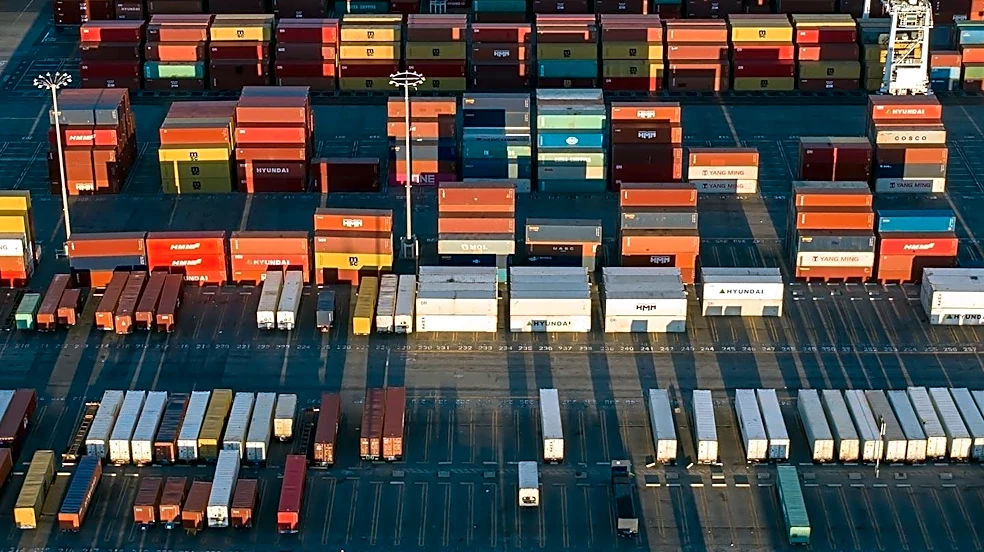
U.S. East and Gulf Coast ports are embarking on significant capacity expansion projects through the 2030s, anticipating continued growth in container trade and a shift in global sourcing patterns. These investments aim to prevent future congestion and enhance
the competitiveness of these ports against West Coast gateways. Major terminal expansions are underway in Savannah, Baltimore, and Wilmington, Delaware, which are projected to add approximately 6.8 million TEUs (Twenty-foot Equivalent Units) of annual capacity over the next decade. Additional projects in Savannah, the Port of Virginia, and Philadelphia are expected to contribute another 3.4 million TEUs and 1 million TEUs, respectively. Along the Gulf Coast, New Orleans, Houston, and Mobile are also planning expansions that could add around 7 million TEUs of capacity through the 2030s.
Why It's Important?
These extensive port expansions are critical for the U.S. economy and its supply chain resilience. Industry projections indicate that U.S. container trade could grow by 2.5% to 3% annually over the next decade, potentially exceeding 66 million TEUs by 2035. The East and Gulf Coast ports are expected to capture an increasing share of this growth as importers diversify sourcing beyond China, particularly towards Southeast Asian countries like Vietnam and Thailand. This shift, coupled with the anticipated return of more ocean services through the Suez Canal, could improve transit times for cargo from these regions, strengthening East Coast competitiveness. By proactively expanding infrastructure, U.S. ports aim to avoid future capacity constraints and bottlenecks, ensuring efficient cargo movement and supporting economic growth. This strategic investment will benefit various industries by providing more reliable and cost-effective access to global markets.
What's Next?
The ongoing expansion projects will continue to unfold over the next decade, with new terminals and infrastructure improvements coming online. Key next steps include the development of new terminals outside densely populated areas to address land limitations and reduce highway congestion. Existing terminals will also focus on increasing capacity through equipment upgrades and improved container stacking systems, such as those being implemented at the Port of New York and New Jersey. Furthermore, enhancing rail connectivity is a critical component of these plans, with Baltimore preparing for double-stack rail service and other ports investing in additional intermodal capacity. The proposed Union Pacific–Norfolk Southern merger could also significantly reshape inland freight movements, further influencing cargo routing decisions and strengthening the connection between coastal gateways and Midwest markets. These developments will collectively position East and Gulf Coast ports to handle larger vessels and increased trade volumes.
Beyond the Headlines
The strategic investments in East and Gulf Coast ports signify a long-term recalibration of U.S. trade infrastructure in response to evolving geopolitical and economic landscapes. The diversification of sourcing away from China reflects a broader trend towards supply chain resilience and risk mitigation. This shift could lead to a more distributed and robust national logistics network, reducing reliance on any single trade route or port region. The emphasis on rail connectivity highlights the importance of integrated multimodal transportation systems, which are essential for efficient inland distribution and reducing environmental impact. Moreover, these expansions could foster regional economic development, creating jobs and attracting related industries to port communities. The proactive approach to infrastructure development also underscores a commitment to maintaining the U.S.'s competitive edge in global trade, ensuring that its ports can adapt to future challenges and opportunities.