



What's Happening?
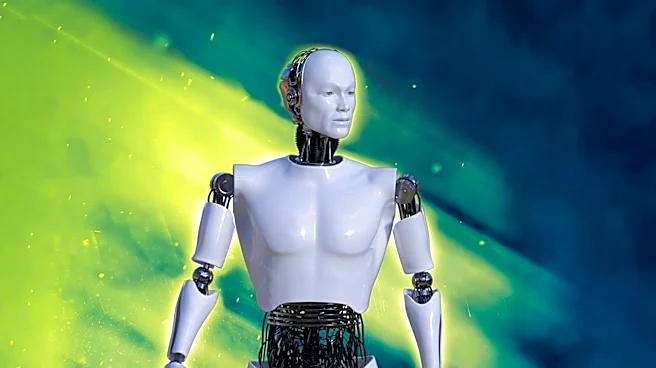
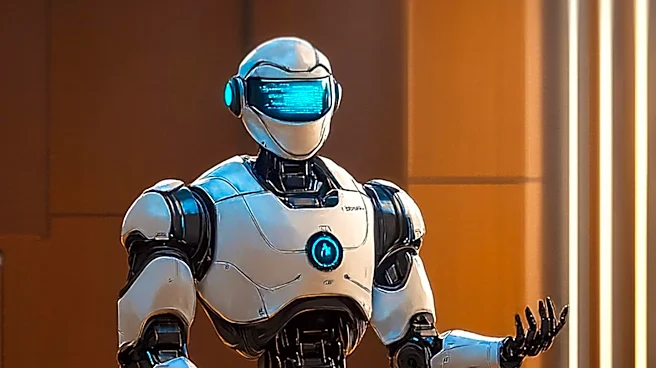
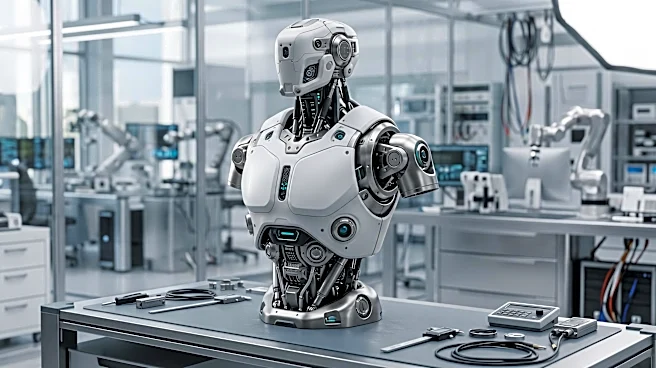
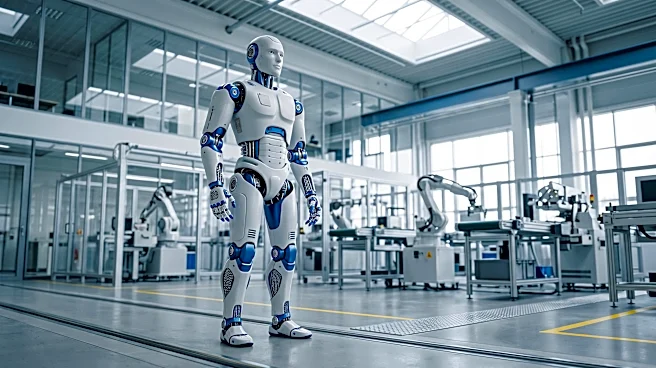
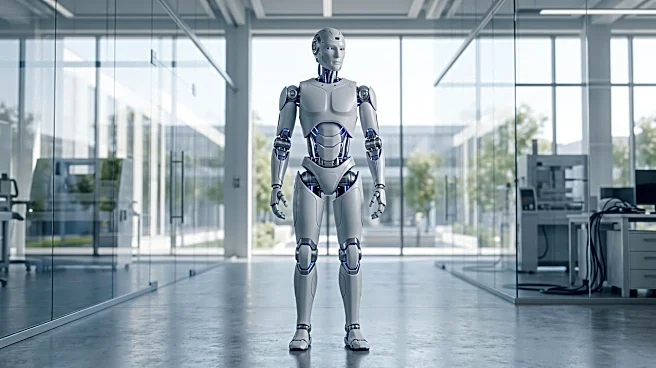
XPENG, a global Physical AI company, introduced its advanced general-purpose humanoid robot, XPENG IRON, at AI Day 2026. The company showcased significant advancements in robotics technology, manufacturing capabilities, and its commercialization strategy.
XPENG's approach involves co-developing the robot's brain and body, integrating AI models, computing, perception, motion control, and robotic hardware. IRON is designed as a work partner for real-world roles, prioritizing foundational capabilities, safety, emotional value, 24/7 operation, and business capabilities. The robot features a three-system architecture (XPENG Turing Physical AI architecture VLA 3.0) that connects higher-level cognition, real-time decision-making, and physical execution. IRON boasts 76 degrees of freedom, over 1,500 tactile sensing points, 3D vision, and 360-degree perception, with its IRON OS running on three proprietary Turing AI chips providing 2,250 TOPS of computing power. Mass production is scheduled to begin in January 2027.
Why It's Important?
The introduction of XPENG IRON marks a significant step towards the mass production and commercial deployment of humanoid robots, moving beyond mere demonstrations to real-world value creation. This development has profound implications for various industries, as humanoid robots could fill roles in commercial services, education, and industrial operations. XPENG's integrated approach to developing both hardware and AI capabilities simultaneously aims to ensure that these robots are not only intelligent but also physically capable and reliable. The company's plan to deploy IRON as a store assistant in XPENG retail stores in Q1 2027 will provide crucial real-world data and validation, paving the way for broader applications. This advancement could lead to increased automation, efficiency, and potentially reshape labor markets by introducing a new class of intelligent, physical AI workers.
What's Next?
XPENG IRON is scheduled to begin training as a store assistant in XPENG retail stores in Q1 2027, where it will undertake tasks such as customer reception and product guidance. This initial deployment will serve as a critical phase for developing and validating its capabilities through real-world interactions. Following this, XPENG plans to expand IRON's roles into other areas, including front-desk reception, store training, educational programs, and event presentations. The company is also developing a commercial model that includes hardware sales, software subscriptions, and an open robotics ecosystem, allowing developers to customize functions and create new skills. Hardware mass production is planned to commence in January 2027, with an automated production line designed to complete one IRON every 2.5 minutes at full capacity.
Beyond the Headlines
The development of XPENG IRON highlights the convergence of artificial intelligence and robotics, pushing the boundaries of what is possible in physical AI. The robot's sophisticated multimodal understanding and embodied expression system, IRON VLM, which integrates visual, audio, and contextual understanding, suggests a future where human-robot interactions are more natural and intuitive. The emphasis on a five-layer physical safety architecture, including collision detection and emergency-stop protections, addresses critical concerns about robot deployment in human environments. Furthermore, XPENG's strategy of extending its automotive AI infrastructure and manufacturing capabilities to robotics demonstrates a scalable model for producing complex AI-driven machines. This could accelerate the adoption of humanoid robots across various sectors, leading to ethical, legal, and societal discussions about the role of AI in daily life and the future of work.