



What's Happening?
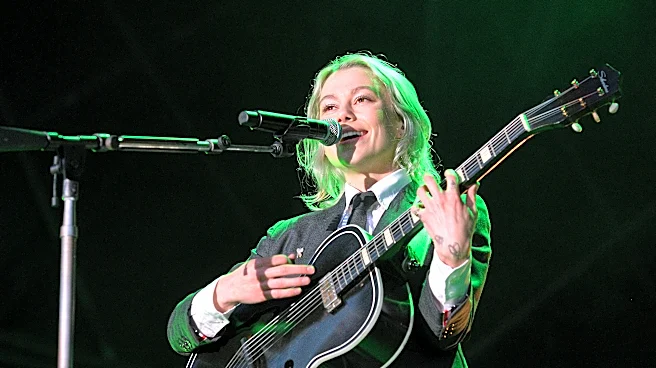
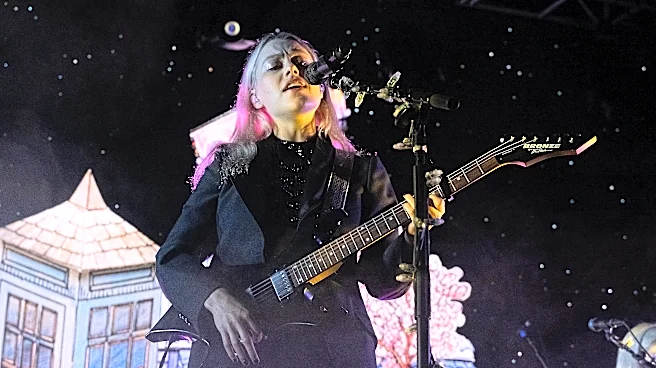
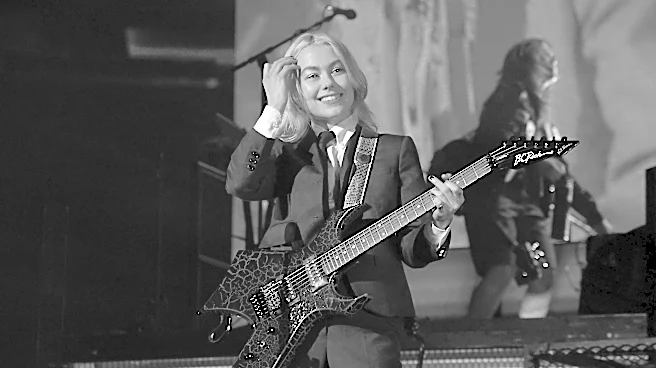
Singer-songwriter Phoebe Bridgers enforced a strict no-phone policy at her recent concert at the 3Arena in Dublin. Attendees were required to deposit their mobile devices in locked pouches upon entry, creating an environment free from digital distractions.
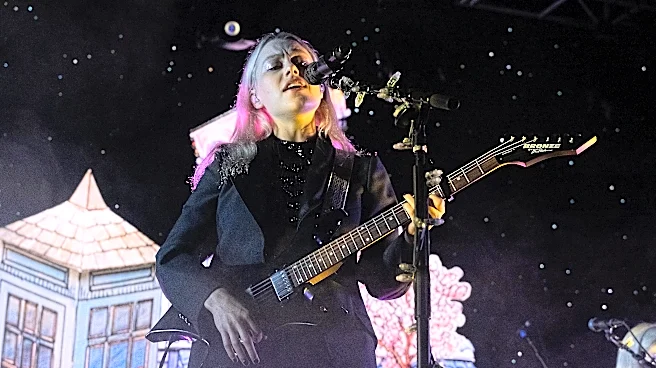
This decision aimed to foster a more immersive and personal experience for both the artist and the audience. Bridgers explained that the absence of recording devices helped alleviate her anxiety about performing certain deeply personal songs live, preventing their immediate dissemination across social media. The concert featured a gothic-style stage presence, with Bridgers in a long black gown, and visuals projected onto back curtains without additional screens in the arena. The setlist included songs inspired by her current relationship with Bo Burnham and a track about her former partner, Paul Mescal, with whom she was rumored to be buying a house in Ireland in 2022.
Why It's Important?
This phone-free concert policy by Phoebe Bridgers highlights a growing trend among artists seeking to reclaim the live performance experience from the pervasive influence of smartphones and social media. By eliminating recording devices, Bridgers aimed to create a more intimate connection with her audience, allowing for a shared, undistracted moment. This approach challenges the modern concert-going norm where many attendees prioritize capturing content for online sharing over direct engagement with the performance. The policy could influence other artists to consider similar measures, potentially shifting audience expectations and behaviors at live events. It also underscores a broader conversation about digital etiquette and the impact of constant connectivity on personal experiences and mental well-being, particularly for performers who feel vulnerable sharing personal narratives on stage.
What's Next?
The success and reception of Phoebe Bridgers' phone-free concert in Dublin may encourage other musicians to adopt similar policies for their tours, potentially leading to a wider movement within the music industry. If more artists implement such rules, concertgoers might gradually adapt to and even appreciate the benefits of an unplugged live experience. This could lead to a re-evaluation of how live music is consumed and valued, shifting the focus back to the auditory and emotional impact of the performance rather than its digital documentation. Furthermore, the discussion around artist anxiety and the need for safe spaces to perform personal material could gain more traction, prompting venues and promoters to explore ways to support artists' well-being and creative expression.
Beyond the Headlines
The phone-free concert experience touches upon deeper societal implications regarding our relationship with technology and the value of presence. In an era dominated by digital mediation, Bridgers' policy serves as a powerful statement about the importance of being fully present in the moment. It implicitly critiques the culture of constant documentation and sharing, which can diminish the authenticity of live experiences. This move could spark broader conversations about digital detoxing and the psychological benefits of disconnecting, even temporarily. Ethically, it raises questions about audience autonomy versus artist control over the performance environment. Culturally, it reflects a potential yearning for more genuine, unmediated interactions in an increasingly digitized world, suggesting a possible counter-movement towards valuing real-time, shared human experiences over their virtual representations.