



What's Happening?
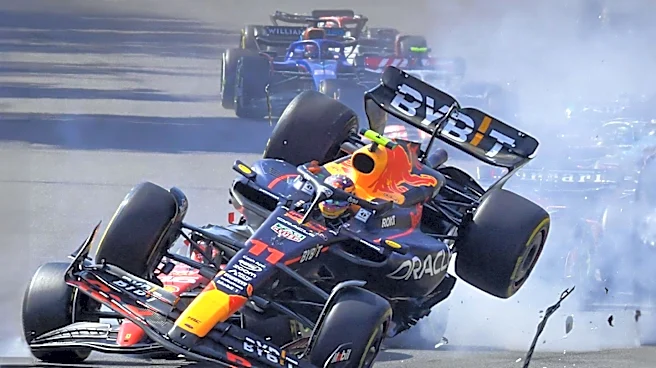
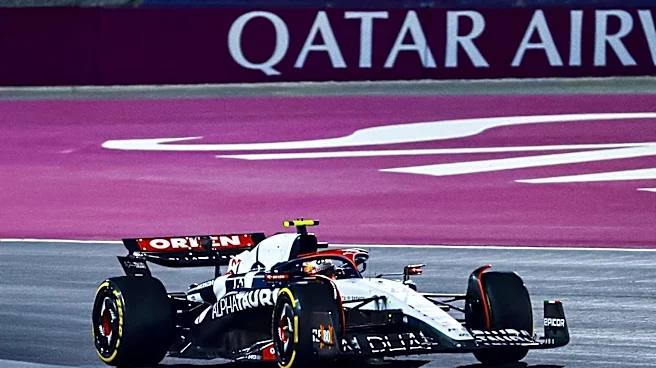
Isack Hadjar has expressed frustration over his collision with George Russell during the opening lap of the Formula 1 Mexico City Grand Prix, an incident that he claims 'completely ruined' his race. While the FIA penalized Russell with a 10-second penalty
for causing the collision at Turn 6, Hadjar also attributed partial blame to himself. He stated that a better qualifying performance, which would have placed him higher than seventh on the grid, might have allowed him to avoid the encounter with Russell. The collision resulted in minor damage to Hadjar's RB22, necessitating a pit stop for repairs, and significantly impacted his potential for a podium finish. Hadjar noted that he felt 'super, super quick' on both medium and soft tires before the incident, suggesting strong race pace that was ultimately unfulfilled.
Why It's Important?
This incident highlights the critical importance of qualifying performance in Formula 1, as starting position can significantly influence a driver's race trajectory and exposure to early-race incidents. For Hadjar, a promising talent, such an event can be a setback in his development and quest for recognition within the highly competitive F1 landscape. The self-reflection from Hadjar, acknowledging his own role in the situation by not maximizing his qualifying, underscores the intense pressure on drivers to perform optimally in every session. For teams, such collisions, even if minor, can lead to unexpected pit stops, strategic compromises, and potential points losses, impacting their standing in the constructors' championship. The FIA's penalty on Russell also reinforces the governing body's stance on aggressive driving and responsibility in on-track incidents.
What's Next?
Following this incident, Isack Hadjar will likely focus on improving his qualifying performance in upcoming races to secure a better starting position and minimize the risk of early-race contact. His team will also be keen to ensure that any lingering issues from the damage sustained in Mexico are fully addressed. For George Russell, the penalty and the incident itself will serve as a reminder of the fine line between aggressive racing and causing avoidable collisions, potentially influencing his approach in future wheel-to-wheel battles. The broader F1 community will continue to monitor how these young drivers learn from such experiences, as they are crucial for their long-term careers in the sport. Hadjar is aiming for a trouble-free weekend in Sao Paulo.
Beyond the Headlines
The incident between Hadjar and Russell, while a common occurrence in the high-stakes environment of Formula 1, also touches upon the psychological aspect of racing. Hadjar's admission of self-blame, despite Russell receiving the penalty, reveals the internal pressure and self-critique that elite athletes often face. This mindset, where drivers constantly seek to optimize their own performance to avoid adverse situations, is a hallmark of top-tier motorsport. Furthermore, the incident underscores the delicate balance between trust and aggression on the track; Hadjar mentioned he 'shouldn't have trusted' Russell, highlighting the inherent tension in competitive racing where drivers must anticipate and react to rivals' actions while also pushing their own limits. This dynamic contributes to the unpredictable and thrilling nature of the sport.