





What's Happening?
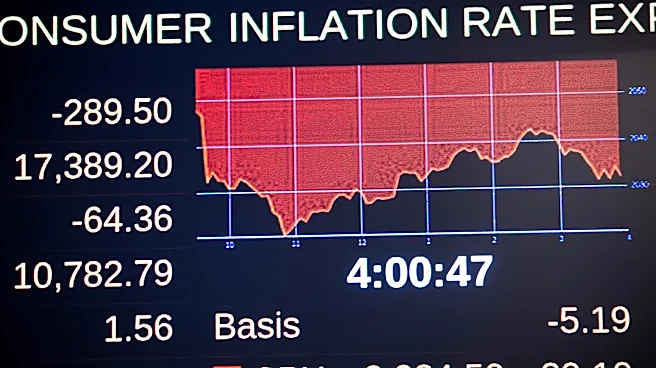
The Consumer Price Index (CPI) data for October 2026 revealed that both headline and core inflation surpassed consensus forecasts. The headline CPI increased by 0.4% month-over-month, while core CPI, which excludes food and energy, rose by 0.3%. These
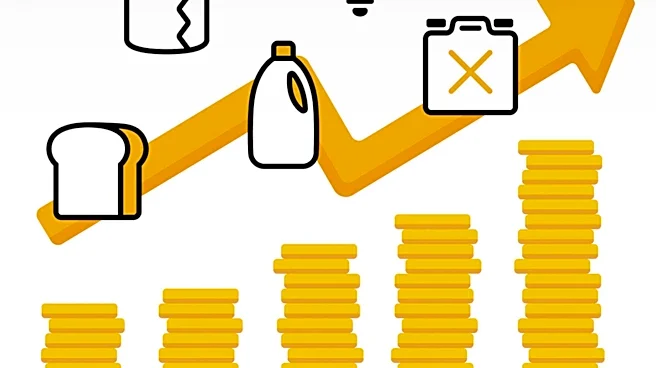
figures exceeded expectations of 0.3% and 0.2% respectively. The report indicated a broadening of price pressures, with an earlier surge in energy prices now filtering into other goods and services. Shelter prices contributed significantly, rising by 0.3% month-over-month and accounting for over 30% of the total monthly headline increase. Food prices also increased by 0.5%, and energy prices saw a 0.7% rise, following a substantial 5.2% jump in September. Ahead of the holiday season, toy prices notably increased by 1.8% month-over-month in October, building on a 4.2% spike in September.
Why It's Important?
The higher-than-expected CPI data for October 2026 carries significant implications for the U.S. economy and monetary policy. The persistent and broadening inflation reinforces the likelihood of further tightening by the Federal Reserve, specifically strengthening the case for a December rate hike and potential additional increases in Q1 2027. This continued monetary tightening is designed to curb inflation but will inevitably lead to higher borrowing costs for consumers and businesses. Increased interest rates can constrain purchasing power, making loans for homes, cars, and business investments more expensive. Consequently, consumer spending, a major driver of the U.S. economy, is expected to become more vulnerable in 2027, potentially slowing economic growth and impacting corporate profitability across various sectors.
What's Next?
Following the release of the October CPI data, market participants and economists will be closely watching for signals from the Federal Reserve regarding its next policy moves. A December rate hike appears increasingly probable, and the Fed's forward guidance will be critical in shaping expectations for early 2027. Businesses should prepare for a sustained period of higher interest rates and potentially reduced consumer demand. Consumers, in turn, may face continued erosion of purchasing power due to persistent inflation and increased costs of borrowing. The Fed's actions will aim to bring inflation back to its target, but the path to achieving this without triggering a significant economic slowdown remains a key challenge. Further economic data releases, particularly on inflation and employment, will heavily influence the Fed's decisions.
Beyond the Headlines
The October CPI report highlights the complex and interconnected nature of inflationary pressures. The 'filtering' of energy price spikes into broader goods and services categories illustrates how initial shocks can propagate throughout the economy, making inflation more entrenched and difficult to combat. The significant contribution of shelter prices to the overall increase also points to structural issues within the housing market that are contributing to persistent inflation. This situation underscores the challenge for the Federal Reserve, as monetary policy tools are more effective at managing demand-side inflation than addressing supply-side or structural cost pressures. The ongoing battle against inflation may require a multi-faceted approach, potentially involving fiscal policies or regulatory changes, in addition to the Fed's interest rate adjustments, to achieve long-term price stability without unduly stifling economic activity.