




What's Happening?
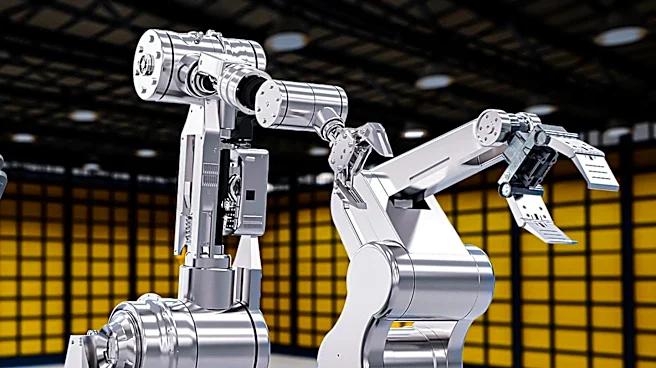
Skild AI is actively recruiting a Robotics Software Engineer for an on-site position in San Mateo, California. The company is focused on developing the 'Skild Brain,' described as a singular foundation model designed to control a diverse range of robotic
systems. These systems include quadrupeds, humanoids, table-top robotic arms, and mobile manipulators. The core functionality of the Skild Brain aims to expose advanced robotic skills such as grasping, object handover, and navigation through an Application Programming Interface (API). This hiring initiative indicates Skild AI's commitment to advancing its core technology and expanding its engineering team to further develop its foundational AI model for robotics. The role is critical for the continued development and refinement of the AI that underpins these complex robotic operations, suggesting a significant phase of growth and technological advancement for the company.
Why It's Important?
This hiring push by Skild AI is significant for the robotics and artificial intelligence sectors, particularly in the U.S. The development of a single foundation model capable of controlling multiple types of robots represents a potential leap forward in robotic autonomy and versatility. Such a model could streamline the development and deployment of robotic solutions across various industries, from manufacturing and logistics to healthcare and service. By offering skills like grasping and navigation via an API, Skild AI aims to make advanced robotics more accessible and easier to integrate into existing systems. This could reduce development costs and accelerate innovation in areas requiring complex robotic interactions. The success of such a foundation model could position Skild AI as a key player in the future of robotics, influencing how autonomous systems are designed, programmed, and utilized across the nation.
What's Next?
The immediate next step for Skild AI is to successfully fill the Robotics Software Engineer position, which will directly contribute to the ongoing development of the Skild Brain. Once the team is augmented, the company will likely focus on refining the foundation model, expanding its capabilities, and potentially integrating it with more diverse robotic hardware. Future developments could include partnerships with robotics manufacturers or end-users to test and deploy their technology in real-world applications. As the Skild Brain matures, it could lead to demonstrations of its ability to control various robots performing complex tasks, potentially attracting further investment and talent. The company's progress in this area will be closely watched by the robotics community, as a successful universal foundation model could set new industry standards.
Beyond the Headlines
The pursuit of a single foundation model for diverse robotic control, as undertaken by Skild AI, carries profound implications beyond immediate technological advancements. It represents a move towards greater standardization and interoperability in robotics, which could unlock new possibilities for automation and human-robot collaboration. Ethically, the development of such powerful and versatile AI models for robotics raises questions about job displacement, the safety of autonomous systems, and the accountability for their actions. Legally, the framework for regulating robots controlled by a universal AI model is still nascent, posing challenges for policymakers. Culturally, the widespread adoption of highly capable robots could reshape societal norms, expectations, and interactions with technology, potentially leading to a future where robots are more seamlessly integrated into daily life and work environments.