







What's Happening?
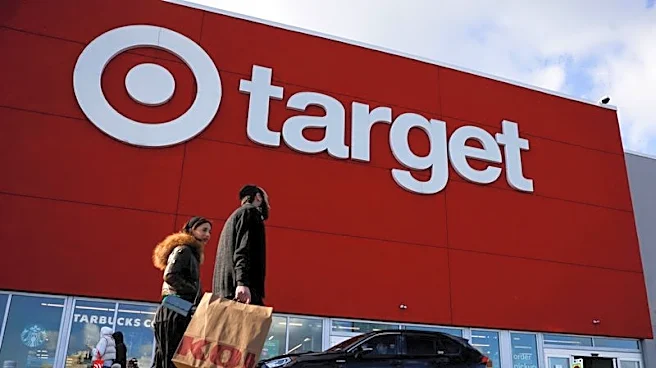
Target's second-quarter net sales increased by 5.3% year-over-year, reaching $26.5 billion, with comparable sales jumping 3.8%. The retailer's net earnings more than doubled to nearly $1.9 billion, significantly boosted by a $994 million tariff refund.
Merchandise sales grew by 5%, while non-merchandise sales, which include the company's advertising network Roundel, loyalty memberships, and a third-party marketplace, surged by 20.1%. Roundel's revenue alone grew 28.6% year-over-year, reaching $279 million. Digital sales saw an 8.7% boost, with same-day delivery services increasing by over 25% year-over-year. Following this strong performance, Target has raised its full-year guidance, now expecting net sales growth in a range around 5%, a full point higher than its previous projection.
Why It's Important?
Target's impressive second-quarter results, particularly the doubling of profits and the upward revision of its full-year outlook, signal robust consumer spending and effective strategic initiatives within the U.S. retail sector. The significant impact of the tariff refund underscores the financial relief U.S. companies are experiencing from the resolution of past trade disputes, directly contributing to enhanced profitability. The substantial growth in non-merchandise sales, driven by its advertising network Roundel and loyalty programs, highlights the increasing importance of diversified revenue streams beyond traditional retail. This trend indicates a broader shift in the retail industry towards leveraging customer data and digital platforms for additional income. Furthermore, the strong performance in digital sales and same-day delivery services reflects the continued consumer preference for convenience and online shopping, pushing retailers to invest further in e-commerce and logistics infrastructure to remain competitive in the U.S. market.
What's Next?
Target's continued performance growth has given executives the confidence to hike its full fiscal-year outlook, now expecting net sales to grow around 5%. The retailer is also heavily investing in artificial intelligence (AI), having recently named its first chief AI officer, Chandhu Nair. Target's CEO, Michael Fiddelke, highlighted the company's AI push, noting that digital traffic from external AI platforms is growing more than 3.5 times faster than the industry average. These AI investments extend to the shopping experience, with the rollout of AI-powered teacher and college wish lists for the back-to-school season and more personalized content on the app's home screen. The company will continue to focus on reducing the impact of tariffs through various means, including changes to country of origin and collaborating with vendors. These strategic initiatives are expected to drive future growth and enhance the customer experience, positioning Target for sustained success in the evolving retail landscape.
Beyond the Headlines
Target's strategic embrace of AI, exemplified by the appointment of a chief AI officer and the integration of AI into its shopping experience, signifies a deeper transformation within the retail industry. This move goes beyond mere technological adoption; it represents a fundamental shift towards data-driven personalization and operational efficiency. The use of AI for personalized wish lists and app content aims to enhance customer engagement and conversion rates, creating a more tailored shopping journey. This could set a new standard for customer experience in retail, pushing competitors to accelerate their own AI initiatives. Moreover, the success of Target's Roundel advertising network points to the growing monetization of retail media, where retailers leverage their vast customer data and digital platforms to offer advertising services to brands. This trend could reshape the advertising landscape, creating new revenue streams for retailers and offering brands more targeted ways to reach consumers, ultimately impacting the broader U.S. advertising and e-commerce ecosystems.