


What's Happening?
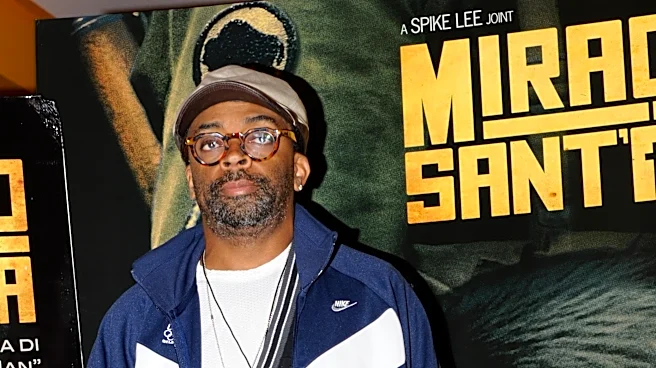
Filmmaker Spike Lee directed his first commercial in 1988 for Nike, featuring his character Mars Blackmon from his debut film 'She's Gotta Have It' alongside basketball star Michael Jordan. This collaboration, born from the popularity of Blackmon's adoration
for Jordan and Nike shoes in Lee's 1986 movie, became widely recognized across America. The commercials, known for Blackmon's line 'It's gotta be the shoes,' significantly boosted sales of Jordan trainers and further elevated Michael Jordan's global fame. Lee, reflecting on the deal, expressed regret over choosing cash payment instead of Nike stock at the time. Nike's ad agency identified the opportunity to pair Lee's character with Jordan after seeing 'She's Gotta Have It,' leading to a mutually beneficial partnership that neither party fully anticipated the scale of. Lee's character Mars Blackmon and the film 'She's Gotta Have It' have had considerable longevity, with Netflix commissioning a spin-off series in 2017, also directed by Lee.
Why It's Important?
This event highlights a significant moment in the intersection of sports, entertainment, and advertising, demonstrating how a creative collaboration can lead to immense commercial success. Spike Lee's early work with Nike not only cemented his burgeoning reputation but also played a pivotal role in shaping Nike's iconic 'Air Jordan' brand into a global phenomenon. The decision to take cash over stock, while seemingly practical at the time, underscores the unpredictable nature of long-term financial growth in rapidly expanding markets. For aspiring creators and entrepreneurs, it serves as a cautionary tale about evaluating equity opportunities. The success of the campaign also showcased the power of celebrity endorsement and character branding in driving consumer behavior, setting a precedent for future marketing strategies in the sports apparel industry. The enduring legacy of the 'Mars Blackmon' character and the 'It's gotta be the shoes' slogan illustrates the lasting cultural impact of effective advertising.
What's Next?
While the specific financial implications of Lee's past decision are historical, the narrative continues to influence discussions around artist compensation, intellectual property, and long-term investment strategies in creative industries. For Spike Lee, his career has continued to flourish with numerous film projects, including a Denzel Washington reimagining of Akira Kurosawa’s 'High to Low,' a musical about Viagra titled 'Boner,' and 'Prince of Cats,' a hip-hop retelling of 'Romeo and Juliet.' The longevity of his early work, such as the Netflix spin-off of 'She's Gotta Have It,' indicates a continued relevance and demand for his creative vision. The story of the Nike commercial deal remains a notable anecdote in his extensive career, often revisited in interviews and retrospectives, serving as a point of reflection on the financial foresight in creative partnerships.
Beyond the Headlines
The story of Spike Lee's Nike commercial deal extends beyond a simple financial decision; it touches upon the broader themes of cultural influence and the valuation of creative contributions. Lee's character, Mars Blackmon, became a cultural icon, bridging the gap between film and advertising and making a significant impact on youth culture and sneakerhead communities. This collaboration helped define an era of sports marketing where athletes and artists became intertwined with brand identity. The regret expressed by Lee about not taking stock highlights the often-underestimated long-term value of equity in successful ventures, particularly for creators whose early work might lay the groundwork for massive corporate growth. It also implicitly raises questions about how artists are compensated for their foundational contributions to brands that later achieve multi-billion-dollar valuations, prompting discussions on fair equity distribution in creative partnerships.