




What's Happening?
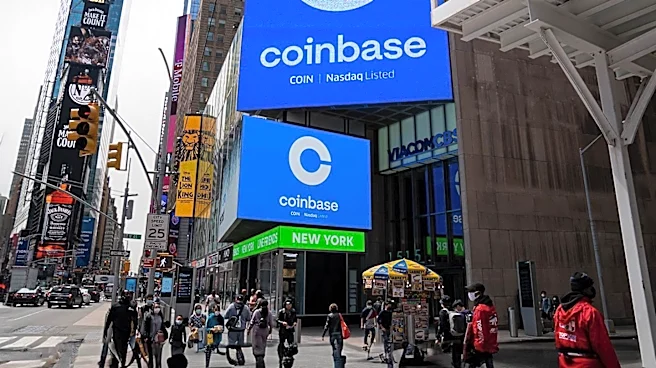
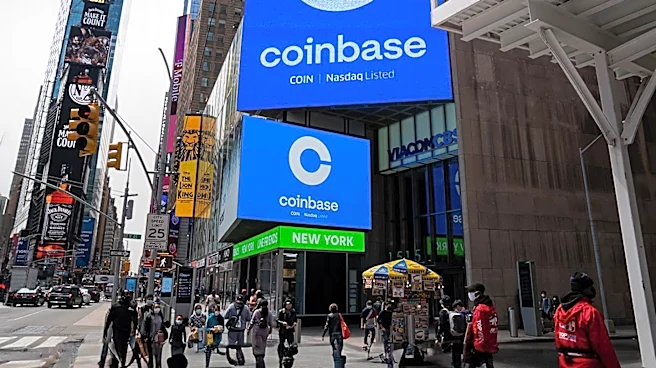
Coinbase Global, a platform for trading and storing digital assets like Bitcoin, has shown a recent stock increase of 7.90%. The company serves both consumer and institutional clients and is expanding its Base Chain network. In a comparison with Visa,
Coinbase exhibits a lower operating margin, currently at -32.6%, compared to Visa's 66.5%. Additionally, Coinbase has a lower price-to-sales (P/S) ratio of 5.6x, making it appear more affordable than Visa, which has a P/S multiple of 17.0x. This valuation metric is used for Coinbase due to its recent net losses. Coinbase's revenue reached nearly $5.6 billion in the 12 months ended September 30, 2026, with a net loss of approximately $701.6 million, indicating a net margin of nearly -12.5%.
Why It's Important?
The comparison between Coinbase and Visa highlights the contrasting characteristics of emerging, high-growth, and volatile digital asset markets versus established, reliable traditional transaction processing. Coinbase's lower P/S ratio suggests it is a more affordable stock relative to its sales, which could attract investors looking for growth opportunities in the fintech sector, despite its current unprofitability. However, Visa's significantly higher operating margin and stable revenue growth underscore the challenges Coinbase faces in achieving consistent profitability in a highly fluctuating crypto market. The volatility of digital assets directly impacts Coinbase's transaction volume and revenue, making its financial performance less predictable than that of Visa. This distinction is crucial for investors deciding between the potential for high returns with higher risk in crypto or stable, consistent returns in traditional payments.
What's Next?
Coinbase's future performance will largely depend on its ability to diversify revenue streams beyond volatile trading volumes and improve its operating margins. The expansion of services like Coinbase Borrow and the Base Chain network are strategic steps towards this goal. Investors will be closely watching for signs of increased profitability and reduced sensitivity to crypto market fluctuations. The company also faces ongoing challenges from an uncertain global regulatory environment, which could impact its operations and growth trajectory. For long-term investors, the decision between Coinbase and Visa involves weighing the high-growth potential and inherent volatility of the crypto economy against the established reliability and strong profitability of traditional payment networks. Future developments in crypto adoption and regulation will significantly influence Coinbase's path forward.
Beyond the Headlines
The financial comparison between Coinbase and Visa reflects a broader narrative in the global economy: the tension and convergence between traditional finance and the burgeoning digital asset space. While Visa represents the mature, highly profitable infrastructure of conventional payments, Coinbase embodies the innovative, yet volatile, frontier of decentralized finance. This dynamic raises fundamental questions about the future of money, transaction processing, and investment. The differing risk profiles and valuation metrics of these two companies illustrate the ongoing shift in investor sentiment and market focus. As digital assets gain more mainstream acceptance, the financial metrics and operational stability of companies like Coinbase will be increasingly scrutinized, potentially leading to new valuation models that better account for the unique characteristics of the crypto economy.