







What's Happening?
Orbis Medicines has announced a strategic collaboration and license agreement with Novo Nordisk, potentially worth up to $1.4 billion. This partnership aims to discover and develop next-generation oral macrocycle therapeutics specifically for cardiometabolic
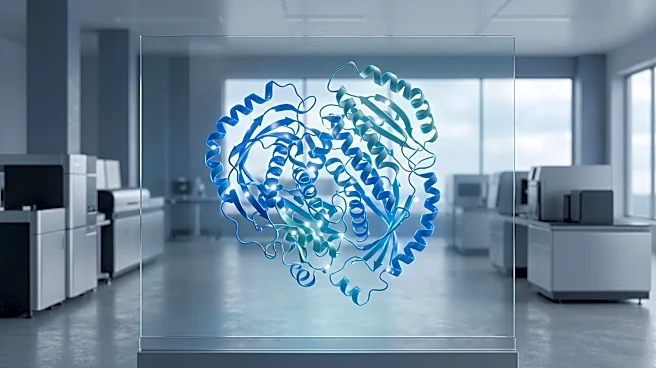
diseases. The agreement includes upfront payments, potential development and commercial milestone payments, and tiered royalties on future product sales. Novo Nordisk will also make a strategic investment in Orbis Medicines. The collaboration will leverage Orbis Medicines' proprietary nGen platform, which integrates generative AI and high-throughput synthesis capabilities. This platform is designed to overcome historical limitations in oral bioavailability and drug-likeness of macrocycles, enabling the rapid discovery of differentiated oral medicines for challenging targets. Morten Graugaard, CEO of Orbis Medicines, emphasized that this collaboration highlights the future of oral biologic drug discovery at the intersection of AI, proprietary experimental macrocycle datasets, and automated chemistry. Brian Vandahl, Senior Vice President, Therapeutics Discovery at Novo Nordisk, stated that the collaboration has the potential to unlock innovative oral treatment options for patients with cardiometabolic diseases.
Why It's Important?
This partnership signifies a major advancement in the pharmaceutical industry's approach to drug discovery, particularly in the realm of cardiometabolic diseases. The focus on oral macrocycle therapeutics could revolutionize treatment options by providing orally available alternatives to injectable biologic drugs, which would significantly improve patient convenience and adherence. The substantial financial commitment from Novo Nordisk, a leader in cardiometabolic disease treatment, validates Orbis Medicines' AI-enabled nGen platform and its potential to accelerate the development of new drug classes. This collaboration could lead to more effective and accessible treatments for widespread conditions like diabetes, obesity, and cardiovascular diseases, impacting millions of patients globally. Furthermore, it underscores the growing trend of integrating artificial intelligence and advanced computational methods into drug discovery, potentially reducing the time and cost associated with bringing new medicines to market.
What's Next?
The immediate next steps involve the initiation of discovery and development activities under the collaboration agreement, leveraging Orbis Medicines' nGen platform. Orbis Medicines will continue to utilize its platform to design, synthesize, and analyze synthetic macrocycles, termed nCycles, optimized for oral bioavailability. The partnership will focus on identifying and developing drug candidates for high-value therapeutic targets in cardiometabolic diseases. As the collaboration progresses, further announcements regarding specific drug candidates entering preclinical or clinical development phases can be anticipated. The success of this partnership could also encourage similar collaborations across the biopharmaceutical industry, further accelerating the adoption of AI and advanced synthesis technologies in drug discovery. Orbis Medicines, having already secured EUR 116 million in venture funding, will likely continue to expand its research and development capabilities.
Beyond the Headlines
This collaboration represents a broader shift in pharmaceutical R&D towards precision medicine and AI-driven approaches. The nGen platform's ability to systematically develop synthetic macrocycles optimized for oral bioavailability addresses a long-standing challenge in drug delivery, potentially making complex therapies more patient-friendly. The integration of generative AI with high-throughput synthesis creates a 'lab-in-the-loop' system that continuously learns and improves, setting a new standard for efficiency and innovation in drug discovery. This model could lead to a significant reduction in drug development timelines and costs, making novel treatments more economically viable. Ethically, the development of more accessible oral medications for chronic diseases could improve health equity, as patients who struggle with injectable treatments or have limited access to healthcare facilities might benefit more readily from oral options. This partnership also highlights the increasing value placed on specialized AI platforms in the biotech sector, signaling a future where AI is central to therapeutic innovation.