



What's Happening?
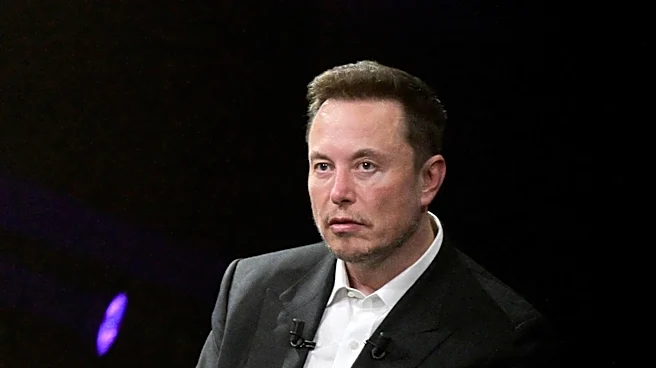
Elon Musk, CEO of SpaceX, recently stated on November 26 that SpaceX is "not yet even on the podium" in the field of artificial intelligence, expressing disappointment in the company's progress in digital superintelligence. This admission came days after
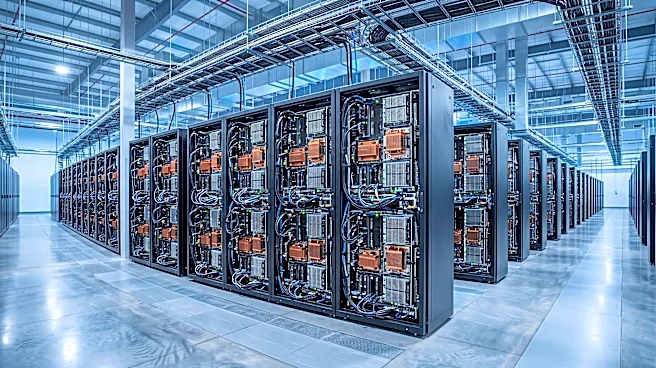
he praised Google's new AI model, Gemini 4 Neon. Despite this perceived lag in its own AI development, SpaceX's Super Intelligence segment generates substantial revenue by renting out compute capacity to rival AI companies. For instance, Anthropic's contract with SpaceX is valued at approximately $3.1 billion per month once fully delivered in December, and Google's contract is around $920 million. These rentals, along with other ventures like Grok, Cursor, and X ads, contributed $7.56 billion to SpaceX's $14.6 billion third-quarter revenue. Analysts anticipate this revenue stream to grow significantly, projecting a nearly sevenfold increase from this year to 2028.
Why It's Important?
Musk's candid assessment highlights a critical dynamic in the rapidly evolving AI landscape: while SpaceX may not be a leader in AI model development, it plays a crucial role as an infrastructure provider for other major players. This strategy allows SpaceX to capitalize on the AI boom without necessarily having a leading proprietary AI product. The substantial revenue generated from renting compute to competitors like Anthropic and Google underscores the high demand for computational resources in AI development. However, this reliance on rivals also presents a significant risk. Both Anthropic and Google are actively developing their own compute capabilities, including lining up custom chips from Broadcom. Should these tenants reduce or terminate their contracts, potentially with as little as 90 days' notice from early 2027, SpaceX's AI revenue stream could be severely impacted, shifting the competitive landscape for AI infrastructure providers.
What's Next?
The immediate focus will be on SpaceX's fourth-quarter results, which will provide insights into the continued performance of its AI compute rental business. The long-term outlook for SpaceX's AI revenue will depend on its ability to retain its major tenants, Anthropic and Google, as they continue to build out their internal compute capacities. The increasing investment by these companies in custom chips, such as those from Broadcom, suggests a potential future reduction in their reliance on external compute providers like SpaceX. This could prompt SpaceX to diversify its AI-related offerings or intensify its own AI development efforts to become a more direct competitor in the AI model space, rather than primarily an infrastructure provider. The evolving strategies of these key players will shape the future of AI infrastructure and market dynamics.
Beyond the Headlines
Musk's statement also subtly reveals the intense competition and rapid pace of innovation within the AI sector. Even a company with the vast resources and ambition of SpaceX finds it challenging to lead in all aspects of AI. This situation underscores the strategic importance of infrastructure in the AI race, where access to powerful computing resources is as critical as groundbreaking algorithms. The dynamic of renting compute to competitors also raises questions about data security, intellectual property, and the potential for future conflicts of interest as these companies vie for dominance. This scenario could lead to a more fragmented AI ecosystem, with companies increasingly investing in proprietary hardware and infrastructure to gain a competitive edge and reduce dependency on rivals.