






What's Happening?
An article titled "The Art of Breathing: Breathwork techniques that will influence your mood for the better" highlights simple breathwork exercises that can be performed anytime, anywhere to channel energy and improve well-being. The piece introduces
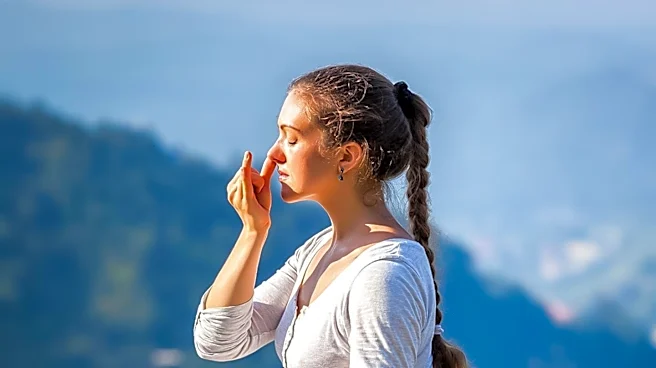
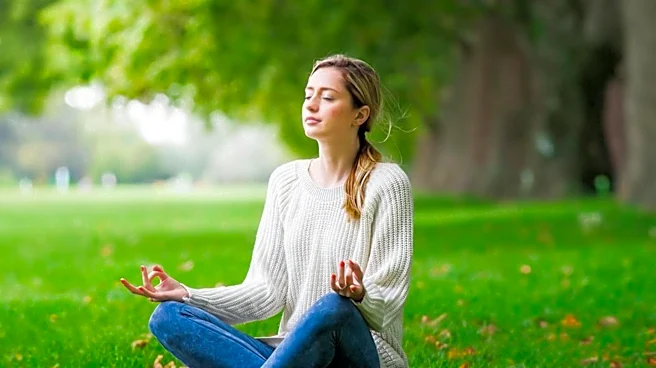
'Pranayama,' the yogic term for 'breath control,' where 'Prana' signifies 'life energy.' By practicing various breathing exercises, individuals can learn to regulate their energy, either to slow down or recharge. The article suggests that connecting to the body and the present moment through controlled breathing can lead to feeling energized in the morning, reducing stress at work, and relaxing at the end of the day. Specific techniques include lengthening exhales for calmer energy, especially at night, by directing breath towards the belly without force. Conversely, to kickstart the day with positive energy, lengthening inhales and directing breath towards the ribcage and chest is recommended to expand and take in more air. These simple yet effective methods aim to help individuals gain control over their mood and energy.
Why It's Important?
This information is significant because it democratizes access to powerful self-regulation tools. In a society often overwhelmed by stress and seeking quick fixes, simple breathwork techniques offer an accessible, free, and immediate method for improving mental and emotional states. The ability to consciously influence one's energy levels—to calm down or energize—empowers individuals to take an active role in their well-being without relying on external factors. This can lead to reduced reliance on less healthy coping mechanisms and foster greater self-awareness and resilience. For U.S. society, where stress-related health issues are prevalent, promoting such straightforward practices can contribute to better public health outcomes and a more mindful approach to daily life. The emphasis on connecting to the body and the present moment also aligns with growing trends in mindfulness and holistic health.
What's Next?
The continued dissemination of information about simple breathwork techniques is likely to increase their adoption among the general public. Wellness platforms, apps, and educational programs may further integrate and promote these practices. As more people experience the benefits, there could be a greater demand for guided sessions, workshops, and resources that delve deeper into various breathwork modalities. Employers might also consider incorporating brief breathwork exercises into workplace wellness programs to help employees manage stress and improve focus. Further scientific research into the physiological and psychological impacts of specific breathing patterns could provide more evidence-based recommendations, leading to broader acceptance and integration into healthcare and educational settings. The simplicity and effectiveness of these techniques suggest they will remain a foundational element in personal well-being strategies.
Beyond the Headlines
The fundamental power of breathwork lies in its direct connection to the autonomic nervous system, which controls involuntary bodily functions like heart rate, digestion, and stress response. By consciously manipulating breath, individuals can directly influence this system, shifting from a sympathetic (fight-or-flight) to a parasympathetic (rest-and-digest) state. This profound physiological link means that breathwork is not just a mental exercise but a powerful biological tool. Culturally, the emphasis on breath as a tool for well-being reflects a return to ancient wisdom traditions that have long understood its significance. In a modern context, where many feel disconnected from their bodies, breathwork offers a tangible way to re-establish that connection, fostering a sense of groundedness and presence. This can have far-reaching implications for mental health, emotional regulation, and overall quality of life, promoting a more embodied and conscious way of living.