


What's Happening?
Jannik Sinner will not participate in the 2026 ATP Finals in Turin, Italy, due to a knee injury that forced him to end his season prematurely. This injury also led to his withdrawal from several tune-up tournaments and the U.S. Open, resulting in the loss
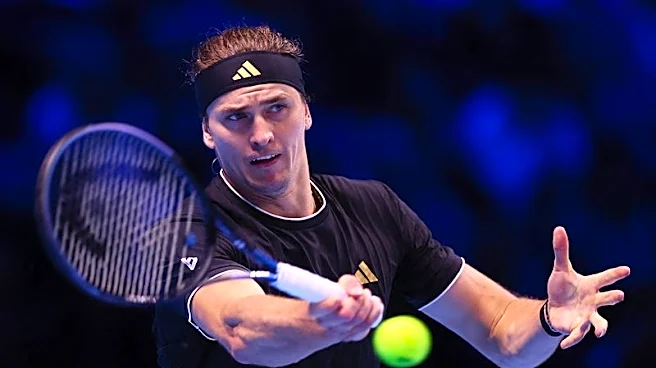
of his world No. 1 ranking to US Open champion Alexander Zverev. Sinner, 25, has not competed in a professional tennis match since winning his second Wimbledon title in July. In addition to his injury, Sinner has made significant changes to his team, including parting ways with his long-time coach Darren Cahill last week. Cahill, 61, was initially expected to leave Sinner's team the previous year but remained for one more season. Magnus Norman, who previously coached three-time Grand Slam champion Stan Wawrinka, will replace Cahill.
Why It's Important?
Jannik Sinner's withdrawal from the ATP Finals and the loss of his world No. 1 ranking have significant implications for the professional tennis landscape. His absence from major tournaments, including the U.S. Open, impacts the competitive dynamics of the sport, allowing other top players like Alexander Zverev to ascend in the rankings. For fans and sponsors, Sinner's injury means missing out on a key player at a prestigious event, potentially affecting viewership and engagement. The coaching change, with Magnus Norman replacing Darren Cahill, signals a new strategic direction for Sinner's career. This shift could influence his future performance and training regimen, potentially altering his trajectory in the sport. The timing of these changes, amidst an injury, highlights the challenges athletes face in maintaining peak performance and managing their careers.
What's Next?
Jannik Sinner aims to return to competitive tennis in 2027, with a potential target being the Australian Open. His recovery from the knee injury will be a critical factor in determining his readiness and performance upon his return. The new coaching partnership with Magnus Norman will begin in 2027, and their collaboration will be closely watched to see how it influences Sinner's game and strategy. The tennis world will be anticipating Sinner's comeback, as his return could shift the dynamics at the top of the men's singles rankings. His performance in early 2027 will be crucial in re-establishing his position among the elite players and regaining his form after a significant injury layoff and coaching transition.
Beyond the Headlines
Sinner's career trajectory, marked by early success and now a significant injury and coaching change, underscores the intense physical and mental demands placed on elite athletes. The decision to part with a long-time coach like Darren Cahill, even after a successful run, reflects the constant pursuit of competitive advantage and the evolving needs of a player's development. This situation also highlights the broader trend in professional sports where athletes often seek new coaching perspectives to overcome plateaus or adapt to new challenges. The support from his parents, who allowed him to make his own decisions without pressure, suggests a foundation of personal autonomy that may be crucial for his recovery and future career choices. This approach could empower Sinner to navigate the complexities of his comeback and adapt to his new coaching environment effectively.