



What's Happening?
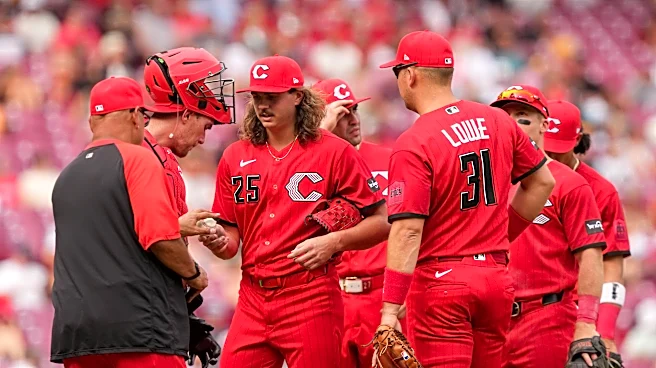
The Cincinnati Reds have activated left-handed pitcher Nick Lodolo from the 15-day injured list, where he had been sidelined due to a blister on his left index finger. Lodolo is scheduled to start against the Chicago White Sox on Tuesday. This marks his return
after a month-long absence, having previously exited a July 11 start against the Chicago Cubs with the same blister issue that also placed him on the injured list at the beginning of the season. To accommodate Lodolo's return, the Reds optioned right-hander Zach McCambley to Triple-A Louisville and purchased the contract of first baseman/outfielder Michael Toglia. Additionally, right-hander Hunter Greene was moved to the 60-day injured list and is slated for season-ending elbow surgery. Lodolo, 28, holds a season record of 3-2 with a 4.60 ERA, 27 walks, and 50 strikeouts across 62 2/3 innings over 12 starts. He has a career record of 27-24 with a 4.13 ERA over 88 regular-season games since 2022 and has previously dealt with blister issues in 2024, 2025, and during his minor league career in 2021. He recently altered his curveball grip to mitigate future blister problems and gave up three runs in 4 1/3 innings during a rehab stint with Louisville.
Why It's Important?
The activation of Nick Lodolo is significant for the Cincinnati Reds as it brings a key starting pitcher back into their rotation, potentially bolstering their performance in the latter part of the season. Lodolo's history of blister issues, however, highlights a recurring challenge that could impact his long-term availability and effectiveness. His attempt to alter his curveball grip demonstrates an effort to address this persistent problem, and the success of this adjustment will be crucial for his and the team's future. The corresponding roster moves, including optioning Zach McCambley and moving Hunter Greene to the 60-day IL for season-ending surgery, underscore the ongoing challenges teams face with pitcher injuries. Greene's surgery, in particular, represents a significant loss for the Reds' pitching staff, placing more pressure on returning pitchers like Lodolo to perform consistently. The addition of Michael Toglia provides depth in the first base and outfield positions, offering the team more flexibility. For the Reds, Lodolo's ability to stay healthy and contribute effectively will be a major factor in their competitive outlook.
What's Next?
Following his activation, Nick Lodolo is scheduled to make his return start against the Chicago White Sox. The immediate focus will be on his performance in this game and, more critically, how his left index finger holds up to the rigors of pitching. The Reds' coaching staff and medical team will closely monitor his condition to ensure the blister issue does not recur, especially given his history with the ailment. His altered curveball grip will be under scrutiny to see if it effectively prevents further irritation. Should Lodolo remain healthy and perform well, he will be expected to solidify his spot in the rotation, providing much-needed stability. Conversely, any re-aggravation of the blister could lead to another stint on the injured list, forcing the Reds to re-evaluate their pitching depth and potentially seek other solutions. The team will also be observing the performance of Michael Toglia, who has been called up to the majors, to see if he can contribute offensively and defensively. The long-term recovery of Hunter Greene from elbow surgery will also be a key consideration for the team's future pitching plans.
Beyond the Headlines
The recurring blister issues faced by Nick Lodolo, and by extension, other pitchers in Major League Baseball, point to a broader challenge within professional baseball regarding player health and the physical demands of pitching. Blisters, while seemingly minor, can significantly impact a pitcher's ability to grip and throw pitches effectively, leading to decreased performance and prolonged absences. Lodolo's decision to alter his curveball grip highlights the innovative and often experimental approaches athletes and teams must take to mitigate such issues. This situation also brings to light the intense pressure on athletes to perform while managing chronic physical ailments, often leading to difficult decisions about playing through pain or taking time off for recovery. The impact of these injuries extends beyond individual players, affecting team dynamics, roster management, and ultimately, the competitive balance of the league. The continuous cycle of injuries and rehabilitation also raises questions about pitching mechanics, ball design, and the overall workload placed on pitchers in modern baseball, prompting ongoing research and development in sports medicine and training methodologies to protect player health and careers.