








What's Happening?
The Internal Revenue Service (IRS) has not yet provided guidance on how winnings from prediction markets should be taxed, leaving tax experts and traders in a state of uncertainty. As prediction markets gain popularity, the lack of clear tax treatment
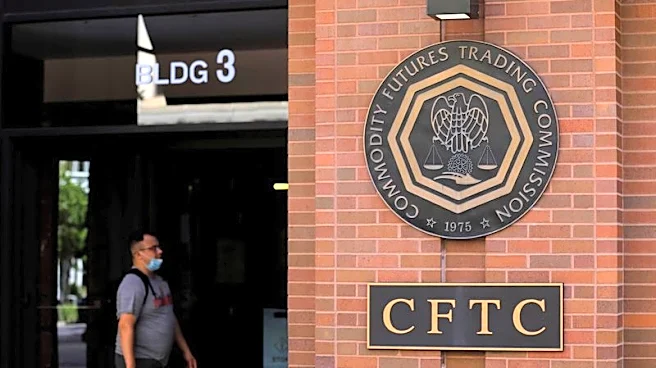
poses challenges. Tax experts suggest that winnings could be categorized under gambling income, capital gains, or Section 1256 contracts, each with different tax implications. The absence of IRS guidance complicates the situation, as states may enact their own laws, potentially leading to a patchwork of regulations. The Commodity Futures Trading Commission (CFTC) also plays a role, asserting jurisdiction over prediction markets, which adds another layer of complexity.
Why It's Important?
The lack of IRS guidance on prediction market taxation has significant implications for traders and the broader financial market. Without clear rules, individuals and businesses face uncertainty in tax planning and compliance. This situation could lead to inconsistent tax treatment across states, complicating the regulatory landscape. The potential for varying state laws may also impact the growth and operation of prediction markets, as traders and platforms navigate differing legal requirements. Additionally, the involvement of the CFTC highlights the regulatory challenges in classifying and taxing these financial instruments, which could influence future policy decisions.
What's Next?
Tax experts and market participants are eagerly awaiting IRS guidance to clarify the tax treatment of prediction market winnings. In the absence of federal direction, states may continue to develop their own regulations, potentially leading to a fragmented legal environment. The IRS's eventual decision will likely have a significant impact on how prediction markets operate and are perceived by traders. Meanwhile, platforms like Kalshi and Polymarket are providing users with Form 1099 to report activity, but the lack of uniform federal guidance remains a pressing issue.