


What's Happening?
The rise of named aesthetics such as 'clean girl,' 'old money,' 'coastal grandma,' and 'mob wife,' along with 'core' aesthetics like 'cottagecore' and 'balletcore,' is significantly influencing how fashion is communicated online. These aesthetics go beyond
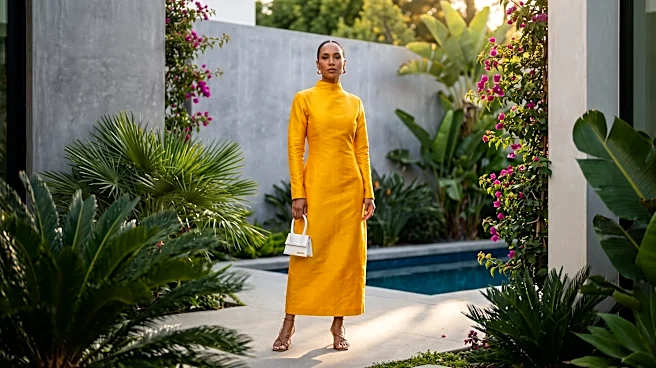
merely describing clothing; they construct recognizable visual worlds that link specific garments with locations, objects, beauty choices, and behaviors. This phenomenon is driven by social media platforms like Instagram and TikTok, which prioritize speed, intimacy, entertainment, searchability, and visibility. Influencers play a crucial role in translating traditional fashion concepts into formats suitable for these platforms, leading to a paradox where despite access to vast amounts of fashion imagery, the ways of expressing personal style are becoming increasingly similar. The individual content of fashion posts may vary, but the underlying communicative patterns and formulations remain consistent, making these aesthetics easily reproducible, recommendable, and commercializable.
Why It's Important?
This trend is important because it highlights a significant shift in the fashion industry and consumer behavior, particularly within the U.S. market. The commercialization of these aesthetics means that businesses, from large retailers to small online shops, are adapting their marketing and product offerings to align with these searchable and reproducible styles. This can lead to both opportunities for brands to tap into popular trends and challenges in maintaining unique brand identities. For consumers, while these aesthetics offer clear guides for personal style, they also contribute to a homogenization of fashion expression, potentially stifling individual creativity. The efficiency with which social media circulates these styles and their associated conventions means that fashion trends can emerge, peak, and fade much faster than in previous eras, impacting production cycles and inventory management for U.S. businesses. Furthermore, the emphasis on visual storytelling and curated online personas influences how individuals perceive and present themselves, extending beyond clothing to lifestyle choices.
What's Next?
The continued evolution of social media platforms and their algorithms will likely further refine how fashion aesthetics are created, disseminated, and consumed. We can expect to see new 'core' aesthetics emerge and existing ones evolve, driven by user-generated content and influencer marketing. Businesses will continue to invest in understanding and leveraging these trends to connect with target demographics, potentially leading to more personalized and algorithm-driven fashion recommendations. There may also be a counter-movement towards more authentic and less curated forms of self-expression as some individuals seek to break away from the perceived uniformity of these aesthetics. The challenge for both individuals and brands will be to navigate this landscape, balancing the desire for connection and trend participation with the pursuit of genuine individuality and sustainable practices. The rapid cycle of trends will also necessitate agile supply chains and marketing strategies for U.S. fashion companies.
Beyond the Headlines
The phenomenon of named aesthetics like 'coastal grandma' reflects deeper cultural shifts in how identity is constructed and communicated in the digital age. It underscores the power of social media not just as a tool for sharing, but as a force that actively shapes cultural norms and expressions. The emphasis on creating a 'recognizable visual world' around an aesthetic suggests a desire for belonging and a shared understanding of taste, even if it leads to a certain level of conformity. This raises questions about authenticity and the commodification of lifestyle. The ease with which these aesthetics become 'searchable' and 'reproducible' also points to the increasing influence of algorithms and data in defining cultural trends, potentially reducing complex individual styles to easily digestible and marketable categories. This could have long-term implications for creativity, originality, and the very definition of 'personal style' in a hyper-connected world.