






What's Happening?
Derrick Rose, the youngest MVP in NBA history and a prominent figure for the Chicago Bulls, recently shared his thoughts on his legacy and how he believes he will be remembered in the future. In an interview with Sports Illustrated, Rose acknowledged
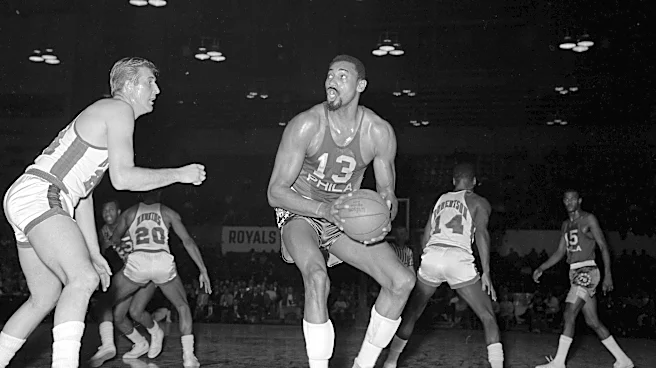
the transient nature of fame in sports, suggesting that younger generations of basketball fans might not recall his contributions. He drew parallels to legendary players like Wilt Chamberlain and Bill Russell, noting that many young fans today are unfamiliar with their achievements despite their monumental impact on the game. Rose expressed his desire to be remembered as a player who competed with intensity and was a winner, despite the injury-plagued latter part of his career.
Why It's Important?
Rose's reflections highlight a broader discussion within professional sports regarding the longevity of an athlete's legacy and the evolving nature of fan engagement. His comments underscore the challenge athletes face in maintaining relevance across generations, particularly in an era of constant content consumption and rapid turnover of sports narratives. For the NBA, it raises questions about how historical achievements are preserved and presented to new audiences. For athletes, it emphasizes the personal struggle with identity and impact beyond their playing years. His perspective offers a poignant look at the psychological toll of a career marked by both extraordinary highs and significant physical setbacks, resonating with many who follow the careers of sports figures.
What's Next?
While Rose's comments are a personal reflection rather than an announcement of future plans, they may spark further conversations among sports analysts and fans about how the NBA and its teams can better honor and educate new generations about its past stars. This could lead to more initiatives from the league or individual franchises to highlight historical players through documentaries, educational programs, or digital content. For Rose himself, his continued presence in the league, even in a reduced capacity, allows him to continue influencing younger players and fans, potentially shaping how his story is told and remembered in the years to come. His candidness might also encourage other athletes to share their perspectives on legacy.
Beyond the Headlines
Rose's contemplation on being forgotten touches upon a universal human concern about lasting impact and memory. In the context of professional sports, where careers are often intense but relatively short-lived, the struggle to define one's legacy becomes particularly acute. His remarks also subtly critique the fast-paced, often short-sighted nature of modern sports fandom, where historical context can be overlooked in favor of current events and emerging stars. This raises deeper questions about the cultural value placed on sports history and the responsibility of institutions to preserve and promote it. It also speaks to the personal journey of an athlete coming to terms with the end of their prime and the transition into a different phase of life, grappling with how their contributions will be perceived over time.