






What's Happening?
Vaishali Shadangule, an Indian designer, is championing traditional hand-woven craftsmanship as a cornerstone of sustainable fashion. Her brand, Vaishali S Couture, which launched in 2001, focuses on showcasing the diversity of Indian textile techniques
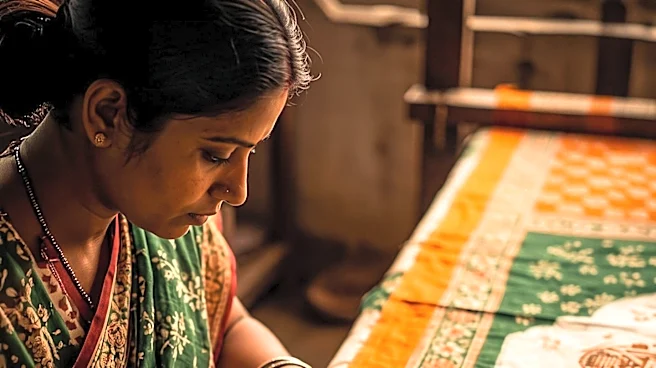
beyond embroidery, utilizing natural raw materials like cotton, silk, and wool. Shadangule emphasizes the importance of close collaboration between designers and artisans, viewing artisans as creators rather than mere manufacturers. She advocates for equitable compensation, training, and recognition for these craftspeople. Her work highlights the innovative potential of handweaving, demonstrating how traditional methods can produce high-quality, unique fabrics with exceptional properties, such as fine merino wool or cashmere blends suitable for diverse garments. Shadangule believes that handcrafted fashion inherently promotes a slower, more conscious, ethical, and sustainable approach to consumption, encouraging consumers to appreciate the labor and artistry involved in each product. She also sees the forthcoming Digital Product Passport as an opportunity to increase transparency regarding the origins, production processes, and ethical aspects of textile goods.
Why It's Important?
Shadangule's advocacy is significant for the U.S. fashion industry and consumers as it promotes a shift towards more ethical and sustainable practices. By highlighting the value of traditional craftsmanship and fair compensation for artisans, her work challenges the fast-fashion model prevalent in many markets. This approach encourages U.S. brands to consider more responsible sourcing and production methods, potentially leading to a greater demand for ethically produced, high-quality textiles. For consumers, it fosters a deeper understanding of the environmental and social impact of their clothing choices, encouraging them to invest in durable, consciously made garments. The emphasis on transparency, particularly through tools like the Digital Product Passport, could influence U.S. regulatory discussions around supply chain ethics and consumer information in the fashion sector. Furthermore, by showcasing the innovative potential of handweaving, Shadangule demonstrates that sustainability does not compromise creativity or quality, offering a viable alternative to mass-produced goods.
What's Next?
The continued push for transparency and ethical sourcing, championed by designers like Shadangule, suggests that U.S. consumers and brands may increasingly demand more detailed information about their products. The adoption of tools like the Digital Product Passport could become more widespread, influencing how fashion brands operate and communicate with their customers. This could lead to greater scrutiny of supply chains and increased pressure on companies to ensure fair labor practices and sustainable material sourcing. Furthermore, as environmental awareness grows among younger generations, there may be a sustained shift in consumer preferences towards handcrafted, ethically produced luxury items, moving away from disposable fashion. This trend could encourage more U.S. designers and manufacturers to explore collaborations with artisan communities globally, fostering economic opportunities for craftspeople and diversifying product offerings in the market. The dialogue around valuing human craftsmanship in an age of AI is also likely to intensify, reinforcing the unique appeal of handmade goods.
Beyond the Headlines
The movement championed by Vaishali Shadangule delves into deeper ethical and cultural dimensions of the fashion industry. It challenges the often-unseen exploitation within global supply chains by advocating for artisans as creators deserving of equal recognition and fair compensation. This perspective encourages a re-evaluation of what constitutes 'luxury' in fashion, shifting it from mere brand prestige to the intrinsic value of human skill, time, and ethical production. Culturally, it promotes the preservation of traditional crafts and knowledge, which are often at risk of being lost in the face of industrialization. The emphasis on the 'soul' within hand-woven fabrics speaks to a more profound connection between consumer and product, fostering a sense of appreciation and longevity that counters the disposability of modern consumption. This approach also highlights the potential for cross-cultural collaboration to create universal creative languages that respect and preserve traditional identities, offering a model for global exchange that is both equitable and enriching.