


What's Happening?
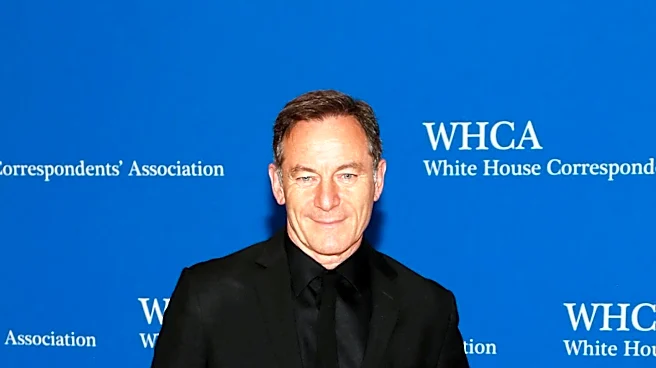
Actor Jason Isaacs, known for his role as Lucius Malfoy in the 'Harry Potter' series, has provided insight into why Netflix canceled the sci-fi series 'The OA'. According to Isaacs, Netflix tends to cancel shows that do not generate 'Stranger Things'-caliber
viewership or significantly increase subscriber counts. He explained that if a show's numbers are not growing and new subscribers are not signing up specifically to watch it, the streaming service sees less utility in continuing the production. 'The OA' was canceled in March 2019 after just two seasons and 16 episodes, leaving viewers with an unresolved cliffhanger. Despite its cancellation, the series has garnered a passionate fanbase who resent Netflix's decision. Isaacs also mentioned that he and the show's creators, Brit Marling and Zal Batmanglij, are still determined to deliver a proper resolution for fans.
Why It's Important?
This explanation from Jason Isaacs highlights a significant aspect of the streaming industry's business model, particularly for platforms like Netflix. It underscores that viewership numbers and subscriber acquisition are critical metrics driving content decisions, often overshadowing critical acclaim or dedicated fanbases. This approach can lead to the premature cancellation of shows that might otherwise find a larger audience over time or through different distribution models. For creators, it means immense pressure to deliver immediate, massive hits, potentially stifling niche or slow-burn storytelling. For viewers, it creates uncertainty about the longevity of their favorite shows and can lead to frustration when series are left incomplete. The emphasis on rapid growth and high-volume viewership impacts the diversity and artistic freedom within the streaming content landscape, prioritizing broad appeal over sustained engagement with specific, perhaps smaller, audiences.
What's Next?
While 'The OA' remains available on Netflix, its future as a continuing series is uncertain under the current streaming model. Jason Isaacs and the creators, Brit Marling and Zal Batmanglij, have expressed their determination to provide a resolution, suggesting potential efforts to revive the series or conclude its story through alternative means. This could involve shopping the series to other streaming platforms or networks, similar to how other canceled shows have found new homes. However, securing a new platform would depend on demonstrating potential for subscriber growth or a viable business case. The creators' commitment indicates that fans might still hold out hope for a conclusion, but the immediate next steps for 'The OA' are not explicitly defined beyond their stated intent.
Beyond the Headlines
The cancellation of 'The OA' and Isaacs's explanation illuminate a broader ethical and artistic dilemma within the streaming content industry. The pursuit of 'Stranger Things'-level success can lead to a 'churn and burn' mentality, where shows are quickly discarded if they don't immediately meet aggressive growth targets. This model can be detrimental to artistic integrity, as creators might feel pressured to conform to popular trends rather than developing unique, complex narratives that require time to build an audience. It also raises questions about the value of a dedicated, albeit smaller, fanbase versus mass appeal. The ongoing availability of canceled shows on platforms like Netflix, despite their unresolved plots, can be seen as a form of 'content graveyard,' where stories are left incomplete, potentially diminishing the overall viewing experience and trust between platforms and their subscribers. This situation reflects a tension between commercial imperatives and artistic ambition in the digital age.