









What's Happening?
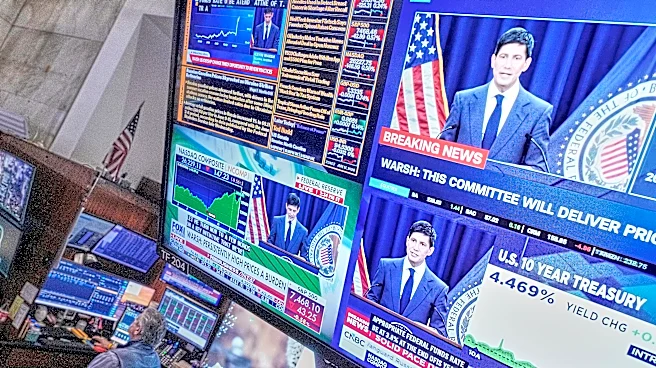
The Federal Reserve, now led by Chair Kevin Warsh, has adopted a more hawkish stance on monetary policy, indicating a potential shift towards interest rate hikes rather than cuts. This change comes after President Trump replaced Jerome Powell with Warsh.
The Federal Open Market Committee (FOMC) has raised its inflation forecast for 2026 from 2.7% to 3.6%, and core inflation expectations have increased from 2.7% to 3.3%. For 2027, core inflation is also expected to rise from 2.2% to 2.5%. The expected policy rate for 2026 has been adjusted from 3.4% to 3.8%, with nine out of 18 voting members anticipating another rate hike this year. Market projections now show only a 0.7% probability of a rate cut by June 2026, with a nearly 90% chance of another rate hike.
Why It's Important?
The Federal Reserve's shift towards a more hawkish monetary policy under Kevin Warsh is significant for several reasons. It signals a focus on controlling inflation, which could impact various sectors of the U.S. economy, including the stock market. The S&P 500, Nasdaq, and Dow Jones may face challenges as higher interest rates can increase borrowing costs for companies, potentially slowing down economic growth. Additionally, heavily indebted companies might struggle with increased financial burdens. However, an inflation-focused Fed could help maintain confidence in the U.S. financial system by ensuring price stability. This approach may also influence global markets, as U.S. monetary policy often sets a precedent for other central banks.
What's Next?
The Federal Reserve's future actions will likely depend on inflation trends and economic data. If inflation continues to rise, further rate hikes could be expected, impacting borrowing costs and investment decisions. Stakeholders, including businesses and investors, will closely monitor the Fed's communications for any indications of policy changes. Additionally, geopolitical developments, such as negotiations between the U.S. and Iran, could influence energy prices and, consequently, inflation. The Fed's commitment to its 2% inflation target suggests that it will remain vigilant in its efforts to control price increases, potentially leading to more aggressive monetary policy measures.