







What's Happening?
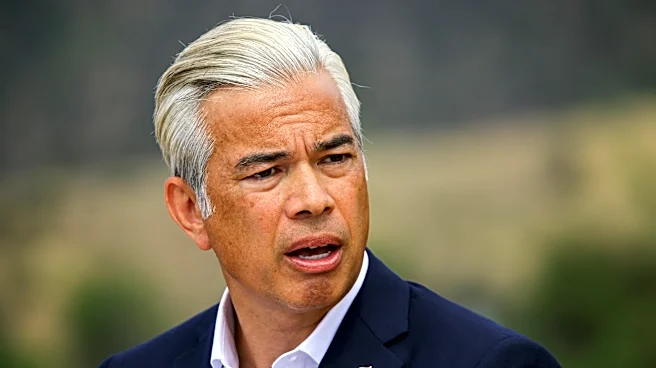
California Attorney General Rob Bonta has halted settlement discussions with Paramount regarding its proposed merger with Warner Bros. Discovery. This development, reported by NBC News' Allie Canal, signifies growing legal hurdles for the media conglomerate's
deal. The cancellation of talks suggests an escalation in the regulatory scrutiny surrounding the merger, indicating that the state of California is taking a firm stance on potential antitrust or public interest concerns. The merger, if approved, would combine two major entertainment entities, leading to significant implications for the media landscape. The Attorney General's decision to cease negotiations underscores the complexity and contentious nature of such large-scale corporate consolidations, particularly when they involve industries with broad public impact like media and entertainment.
Why It's Important?
The California Attorney General's decision to cancel merger talks with Paramount is significant because it highlights the increasing regulatory oversight of major corporate mergers, especially in the entertainment sector. This action could set a precedent for how state attorneys general approach large-scale consolidations, potentially leading to more rigorous reviews and interventions. For the U.S. entertainment industry, this could mean a more challenging environment for mergers and acquisitions, impacting companies' strategies for growth and market dominance. Consumers might benefit from increased competition if the merger is ultimately blocked, potentially leading to more diverse content offerings and competitive pricing. Conversely, the companies involved, Paramount and Warner Bros. Discovery, face uncertainty, which could affect their stock values, investment plans, and overall market position. The outcome of this situation will likely influence future merger discussions across various industries, emphasizing the critical role of state-level regulatory bodies.
What's Next?
With the cancellation of settlement talks, the proposed merger between Paramount and Warner Bros. Discovery faces an uncertain future. The California Attorney General's office is likely to continue its independent review, potentially leading to legal action to block the merger or impose stringent conditions. This could involve formal investigations, requests for additional information, or even lawsuits if the state determines the merger would harm competition or consumers. Paramount and Warner Bros. Discovery will need to reassess their strategy, which might include attempting to address the state's concerns through concessions, preparing for a legal battle, or even reconsidering the merger altogether. The situation could also prompt other state or federal regulatory bodies to intensify their scrutiny, creating a multi-front challenge for the companies involved. The resolution of these legal challenges will dictate the future structure of these major media entities and could influence the broader landscape of media consolidation.
Beyond the Headlines
The cancellation of merger talks extends beyond immediate corporate implications, touching upon broader themes of market concentration and consumer welfare in the digital age. This move by the California Attorney General reflects a growing concern among regulators about the potential for mega-mergers to stifle innovation, reduce consumer choice, and create monopolies in critical sectors like media. It raises questions about the balance between corporate growth ambitions and the public interest, particularly in an era where media consumption is increasingly centralized through a few dominant platforms. The legal and ethical dimensions of such consolidations are under intense scrutiny, with regulators weighing the economic benefits of scale against the risks of reduced competition and potential content homogenization. This case could contribute to a re-evaluation of antitrust enforcement in the U.S., potentially leading to a more proactive and interventionist approach from regulatory bodies to safeguard market diversity and consumer interests.