







What's Happening?
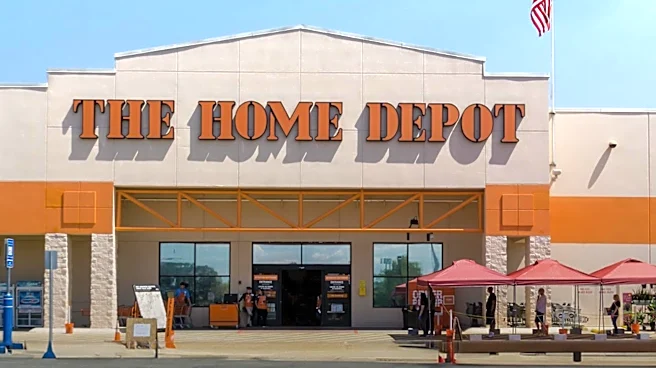
Customers purchasing items from Home Depot's website are advised to double-check product specifications directly on the manufacturer's own page. The specifications listed on Home Depot's website are sourced from brands that feed catalog data, and this
process can sometimes lead to inaccuracies or 'garbled-up numbers.' Home Depot explicitly states in its product order section that it does not guarantee the accuracy or completeness of the information on its site. A survey by Syndigo, a product data management company, revealed that 35% of shoppers returned purchases because the product did not match the online description. Examples of inaccuracies include incorrect amperage ratings for appliances, such as an LG electric dryer listed with a 15-amp rating on Home Depot's site, while the manufacturer's documentation specifies a 30-amp circuit, and LG's own page lists 240V, 26 amps.
Why It's Important?
The potential for inaccurate product specifications on Home Depot's website carries significant implications for consumers, potentially leading to incorrect purchases, installation issues, and safety concerns. For instance, an incorrect amperage or voltage rating for an appliance could result in a mismatched circuit, posing electrical hazards or causing damage to the product and home. This issue also impacts customer satisfaction and trust, as evidenced by the high percentage of returns due to discrepancies. For Home Depot, these inaccuracies can lead to increased return rates, logistical challenges, and potential damage to its reputation. The reliance on direct data feeds from manufacturers without thorough internal verification highlights a broader challenge in e-commerce for large retailers managing vast product catalogs.
What's Next?
Home Depot customers should adopt a practice of cross-referencing product specifications with manufacturer websites before making a purchase, especially for items with critical technical details like appliances and tools. Home Depot may need to consider implementing more robust data verification processes or clearly communicating the potential for discrepancies to manage customer expectations. Manufacturers also bear responsibility for the accuracy of the data they provide to retailers. The issue could prompt industry-wide discussions on improving data integrity in e-commerce, potentially leading to new standards or technologies for product information management to reduce errors and enhance the online shopping experience.
Beyond the Headlines
This issue extends beyond mere inconvenience, touching upon consumer protection and the evolving landscape of online retail. The disclaimer by Home Depot regarding the accuracy of its website content raises questions about the extent of retailer responsibility for product information provided by third parties. It highlights a systemic challenge in the digital marketplace where the sheer volume of products makes manual verification impractical. This situation could spur innovation in automated data validation or blockchain-based solutions for product information. Furthermore, it underscores the importance of consumer vigilance and digital literacy in navigating online shopping, where the burden of verifying product details increasingly falls on the buyer, despite the expectation of accurate information from reputable retailers.