








What's Happening?
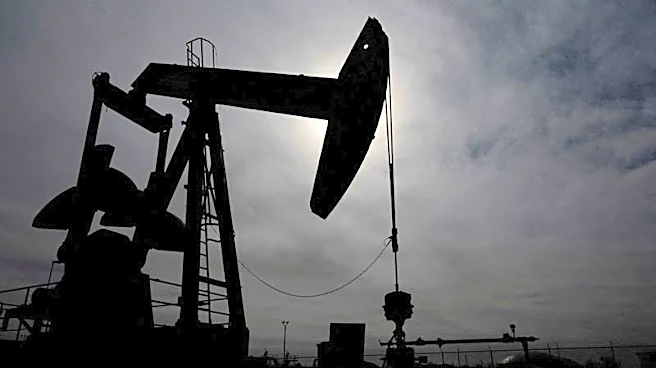
Oil prices have increased as uncertainty looms over the U.S.-Iran truce following the cancellation of peace talks in Switzerland and escalating tensions in the Middle East. Brent crude futures rose by 0.64% to $80.36 per barrel, while U.S. West Texas
Intermediate crude increased by 1.7% to $77.88 per barrel. The market is reacting to the potential instability of the truce, as Israel continues its military actions in Lebanon, raising doubts about the durability of the peace agreement. The reopening of the Strait of Hormuz has allowed several tankers to pass through, but traders remain cautious, awaiting confirmation that tanker traffic is normalizing. The agreement between the U.S. and Iran is expected to release over 85 million barrels of oil into global markets, potentially easing supply constraints.
Why It's Important?
The situation highlights the fragility of geopolitical agreements and their impact on global oil markets. The Strait of Hormuz is a vital passage for a significant portion of the world's oil and liquefied natural gas, and any disruption can lead to substantial price fluctuations. The uncertainty surrounding the U.S.-Iran truce and ongoing regional conflicts could lead to increased volatility in oil prices, affecting global economic stability. The potential lifting of U.S. sanctions on Iranian oil could increase supply, but geopolitical tensions may offset these gains, keeping prices elevated.
What's Next?
The oil market will closely monitor developments in the U.S.-Iran relationship and regional conflicts. The ability of Middle Eastern producers to resume exports and the normalization of tanker traffic through the Strait of Hormuz will be critical in stabilizing prices. Analysts will also watch for any changes in U.S. foreign policy that could impact the peace agreement. The market's response to these factors will determine the trajectory of oil prices in the coming months.