






What's Happening?
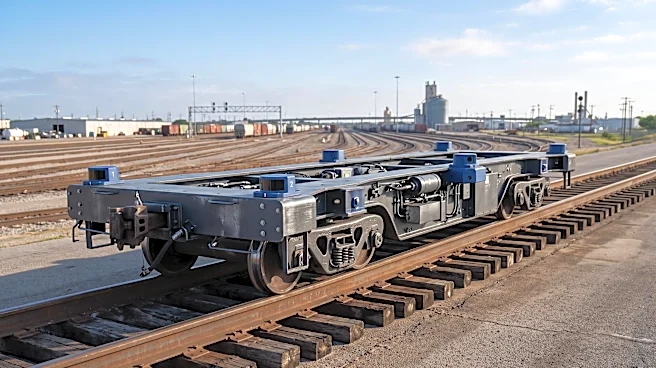
Watco, a prominent short line railroad holding company in North America, has announced an agreement to expand its use of Intramotev's TugVolt autonomous railcar technology to a second site in Seadrift, Texas. This expansion builds upon the successful
deployment of TugVolt at Watco's terminal in Wood River, Illinois, where the technology is already in revenue service, moving soda ash for customers. According to Aaron Jensen, Watco's senior vice president of operations solutions and support, the Wood River deployment demonstrated TugVolt's capability for safe, reliable car handling and its integration into existing operations. Intramotev, recognized as the first company globally to commercially deploy autonomous freight railcars, has seen its TugVolt technology move over 650,000 tons of material and 9,000 carloads in production across various active deployments in Missouri, Illinois, Michigan, and Austria. This agreement marks another milestone in a busy year for Intramotev, which also secured agreements with R.J. Corman in Kentucky and Austria's national railway, and saw US Army Reserve soldiers train on TugVolts.
Why It's Important?
This expansion signifies a critical step in the adoption of autonomous technology within the U.S. freight rail industry. The successful deployment and subsequent expansion of Intramotev's TugVolt technology by Watco demonstrate a growing confidence in autonomous rail solutions for industrial applications. This could lead to increased efficiency, enhanced safety, and potential cost reductions in railcar switching operations, benefiting logistics and manufacturing sectors across the nation. The technology's ability to operate autonomously reduces the need for human intervention in potentially hazardous environments, improving workplace safety. Furthermore, the Federal Railroad Administration's selection of the City of Columbia, Missouri, for a $16.2 million grant to deploy TugVolt technology underscores governmental support and recognition of its potential. This trend could accelerate the modernization of rail infrastructure, making U.S. supply chains more resilient and competitive. Companies like Watco, which operates over 45 railroads across 7,100 miles of track, stand to gain significant operational advantages, while Intramotev solidifies its position as a leader in autonomous freight rail.
What's Next?
Following the expansion to Seadrift, Texas, Intramotev and Watco will focus on integrating the TugVolt units into the industrial facility's operations to switch railcars. The success of this deployment will likely influence further adoption of autonomous railcar technology across Watco's extensive network and potentially other short line railroads in North America. The ongoing training of US Army Reserve soldiers on TugVolts and the Federal Railroad Administration's grant to Columbia, Missouri, suggest a broader interest in evaluating and implementing this technology for various applications, including military logistics and municipal infrastructure. Future developments may include further technological enhancements to TugVolt, such as increased autonomy levels, improved sensor capabilities, and more sophisticated integration with existing rail management systems. The industry will be watching closely to see how these deployments impact operational metrics, safety records, and overall cost-effectiveness, which will be crucial for wider commercial acceptance and regulatory frameworks.
Beyond the Headlines
The increasing adoption of autonomous railcar technology, as exemplified by Watco's expansion with Intramotev, points to a significant transformation in the logistics and transportation sectors. Beyond immediate operational benefits, this shift raises deeper implications regarding workforce evolution, regulatory adaptation, and the ethical considerations of autonomous systems. The introduction of autonomous railcars could lead to changes in labor demands, requiring new skill sets for monitoring and maintaining these advanced systems, while potentially reducing roles in traditional railcar switching. Regulators will face the challenge of developing comprehensive safety standards and operational guidelines for autonomous freight, ensuring public safety and interoperability with conventional rail systems. Ethically, the deployment of AI-driven systems in critical infrastructure like rail transport necessitates robust discussions on accountability in the event of incidents and the long-term societal impact of automation. This technological advancement is not just about moving goods more efficiently; it's about redefining the future of industrial transportation and its broader societal footprint.