

What's Happening?
A recent advertisement for a new co-branded golf driver, featuring personalities from the golf-focused media company Good Good and equipment maker Callaway, has ignited significant controversy. The ad depicted Garrett Clark, a co-founder of Good Good,
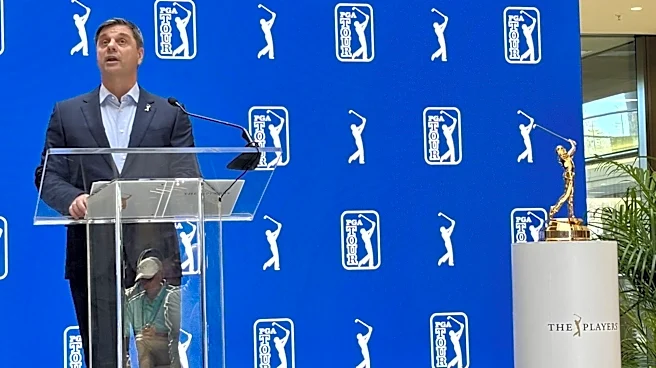
shoulder-checking Alexis Miestowski to the ground as she reached for his driver. This imagery quickly drew widespread backlash, leading to the ad's removal and apologies from both Callaway and Good Good. Callaway CEO Chip Brewer admitted the company approved the ad and apologized, stating the content was inappropriate and did not reflect their values. Good Good also issued an apology, reaffirming its mission to make golf more inclusive. The incident has put Good Good's partnership with the PGA Tour under scrutiny, particularly concerning the upcoming Good Good Championship in November. PGA Tour CEO Brian Rolapp expressed disappointment in Good Good's initial response, describing it as defensive and late, and indicated that the situation is fluid regarding the tournament.
Why It's Important?
This incident highlights a significant clash between traditional golf sensibilities and the emerging internet culture within the sport. The PGA Tour, historically a bastion of conservative values, has been attempting to modernize its brand and attract new fans by embracing golf influencers and content creators like Good Good. However, this controversy underscores the risks associated with such partnerships, particularly when the content produced by these new media entities deviates sharply from the Tour's established values. The backlash demonstrates the power of public opinion and social media in holding brands accountable for their advertising and partnerships. For Callaway, a major equipment manufacturer, the incident risks reputational damage and could impact consumer trust. For Good Good, its future collaborations and standing within the golf community are now in question, potentially affecting its ability to grow and monetize its content. The PGA Tour's response will set a precedent for how it manages relationships with internet personalities and navigates the evolving landscape of sports marketing.
What's Next?
The PGA Tour is actively monitoring the situation and evaluating Good Good's response to the controversy. PGA Tour CEO Brian Rolapp indicated that while initial reactions were disappointing, subsequent responses from Good Good have shown improvement. The immediate future will involve continued discussions between the PGA Tour and Good Good to determine the fate of their partnership, particularly concerning the Good Good Championship scheduled for November. This could lead to a re-evaluation of the terms of their collaboration, potential sanctions, or even the cancellation of the event if the PGA Tour deems Good Good's actions and responses insufficient. Both Callaway and Good Good will likely implement stricter content review processes for future advertisements and collaborations to prevent similar incidents. The broader golf industry will also be watching closely, as this event could influence how other traditional sports organizations approach partnerships with internet-based content creators and manage brand image in the digital age.
Beyond the Headlines
This controversy extends beyond a single advertisement, touching upon deeper cultural shifts within sports and media. It exposes the tension between the desire for traditional institutions to remain relevant by engaging with new, often more irreverent, online communities, and the imperative to uphold established values and ethical standards. The incident raises questions about the responsibility of influencers and brands in shaping public discourse and promoting respectful behavior, especially in a sport striving for greater inclusivity. The rapid growth of internet golf personalities has democratized access to the sport but also introduced challenges in maintaining brand consistency and managing diverse content styles. This event could trigger a broader re-evaluation of content guidelines and partnership criteria across the sports industry, prompting a more deliberate approach to integrating internet culture while safeguarding core values. It also highlights the ongoing debate about gender representation and the portrayal of women in sports marketing, emphasizing the need for sensitivity and respect in all forms of media.