






What's Happening?
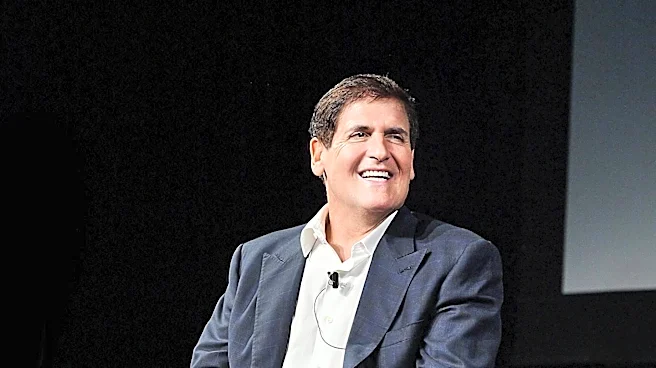
Billionaire entrepreneur Mark Cuban has suggested a tax policy change aimed at reducing wealth inequality. He proposes increasing taxes on any company that does not offer equity to every employee on a pro-rata basis, relative to non-founder executives.
Cuban argues that if company leaders benefit financially from market success, employees should also share in that upside. He has historically practiced this approach in his own ventures, citing instances where a significant number of employees became millionaires after the sale of his companies, such as Broadcast.com to Yahoo in 1999 and MicroSolutions to CompuServe. His proposal is not merely about raising taxes but using tax policy as an incentive for companies to adopt broader employee ownership models.
Why It's Important?
This proposal could significantly impact corporate compensation structures and wealth distribution within the U.S. business landscape. If implemented, it would encourage a shift towards more inclusive ownership models, potentially empowering a wider range of employees with a direct stake in their company's success. This could lead to increased employee engagement, retention, and a more equitable distribution of profits, addressing long-standing concerns about wealth inequality. Companies that currently do not offer broad-based equity could face higher tax burdens, potentially prompting them to re-evaluate their compensation strategies. Conversely, businesses already offering such benefits might gain a competitive advantage or face reduced tax liabilities, fostering a more employee-centric corporate culture.
What's Next?
While Mark Cuban's proposal is currently a suggestion, its discussion by a prominent business figure could spark further debate among policymakers, business leaders, and labor advocates. It might influence future legislative discussions regarding corporate tax reform and employee benefits. Companies may begin to assess the potential implications of such a policy, considering how it could affect their financial planning, talent acquisition, and public image. The concept could also inspire other entrepreneurs and investors to adopt similar employee equity models voluntarily, even without a legislative mandate, as a means of fostering a more engaged and financially secure workforce.
Beyond the Headlines
Cuban's proposal touches upon deeper ethical and economic considerations regarding the purpose of a corporation and the distribution of value created by collective effort. It challenges the traditional model where the benefits of market success are primarily concentrated among executives and shareholders. By advocating for pro-rata equity for all employees, Cuban highlights the idea that every individual, from the CEO to the janitor, contributes to a company's success and should therefore share in its financial rewards. This could lead to a re-evaluation of corporate social responsibility and the role of businesses in addressing societal issues like wealth disparity, potentially fostering a more inclusive form of capitalism.