





What's Happening?
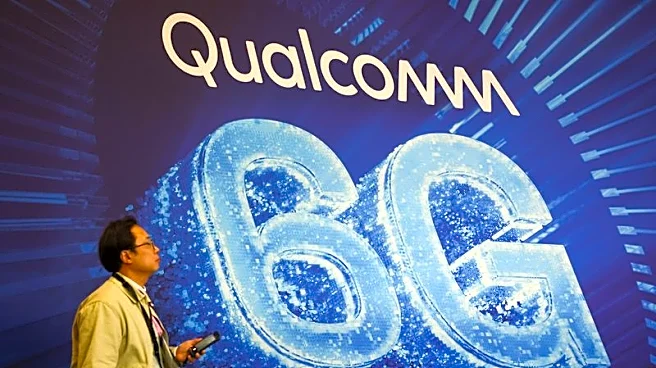
Alphabet, Google's parent company, has acquired a stake worth nearly $548 million in Qualcomm, as disclosed in a regulatory filing. As of September 30, 2026, Alphabet held approximately 3 million Qualcomm shares. This investment comes as Qualcomm is undergoing
a significant transition, aiming to expand its business beyond mobile processors into the artificial intelligence (AI) data center market. Qualcomm is targeting $15 billion in annual data center chip revenue by 2029, a substantial goal for a relatively new venture in this sector. The investment from Alphabet, a long-standing partner through Google's Android operating system, provides a significant boost to Qualcomm's efforts to become a major supplier in the AI infrastructure boom. This move also positions Qualcomm in direct competition with established players like Nvidia in the market for AI accelerators.
Why It's Important?
This substantial investment from Alphabet is a strong vote of confidence in Qualcomm's strategic pivot towards AI data centers, especially at a time when Qualcomm is facing weakening smartphone demand and pressure to find new growth engines. The financial backing from a major tech giant like Alphabet can provide Qualcomm with the capital and credibility needed to accelerate its AI data center ambitions. This expansion is critical for Qualcomm to diversify its revenue streams and reduce its reliance on the smartphone market, which has seen recent downturns. The competition in the AI accelerator market is intense, with Nvidia currently dominating. Alphabet's investment, alongside existing support from Amazon, Microsoft, and Meta, indicates a growing interest among major cloud providers in exploring alternatives to Nvidia's expensive processors, creating a significant opportunity for Qualcomm. This could lead to a more competitive and innovative AI infrastructure market, benefiting various industries that rely on AI technologies.
What's Next?
Qualcomm will continue to court major cloud providers with its custom AI processors, leveraging its experience in energy-efficient smartphone chips for large-scale computing facilities. The company's goal of achieving $15 billion in annual data center chip revenue by 2029 will be a key metric to watch. Investors will be looking for concrete evidence of revenue generation from these new data center contracts. The investment from Alphabet also comes amidst reports of Qualcomm's plans for global job cuts as part of a performance-focused restructuring, indicating a period of significant internal change. The success of Qualcomm's AI data center strategy will depend on its ability to convert growing interest from technology giants into sustainable business and effectively compete with established players in the AI chip market.
Beyond the Headlines
Alphabet's investment in Qualcomm highlights a broader industry trend where major tech companies are strategically investing in semiconductor firms to secure their supply chains and influence the development of critical technologies, particularly in the burgeoning field of AI. This move also underscores the evolving relationship between hardware manufacturers and software platforms, as companies like Google seek to integrate deeper into the underlying infrastructure that powers their services. While Qualcomm and Google have a long history of collaboration in the smartphone sector, Google is also pursuing its own AI chip strategy with its Tensor Processing Units. This creates an interesting dynamic where the two companies are both partners and potential competitors in the data center market. The long-term implications could include a more fragmented and specialized AI chip market, with various tech giants backing different semiconductor players to meet their specific AI computing needs.