


What's Happening?
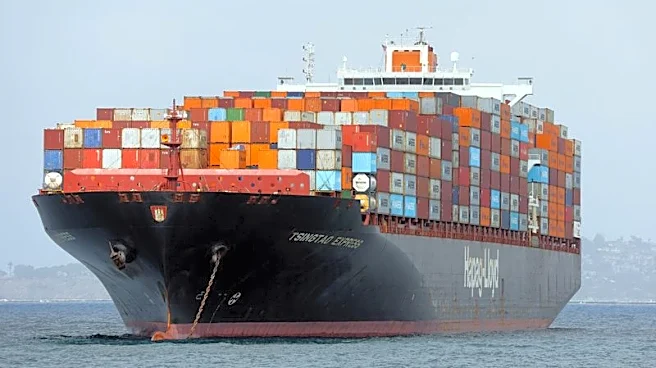
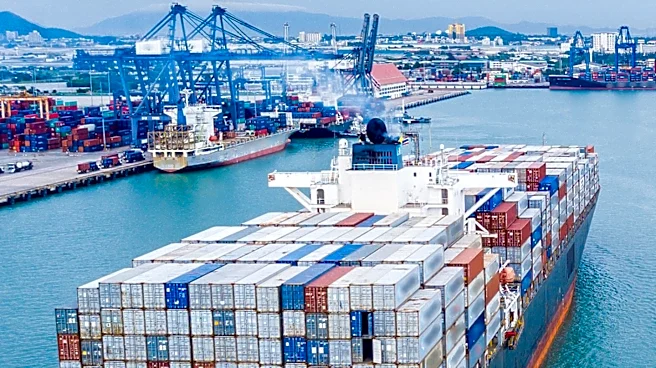
Commercial shipping of critical minerals and rare earths is increasingly exposed to geopolitical risks, leading to higher security premiums and a redefinition of logistics. Militarized chokepoints, such as the Strait of Malacca and the South China Sea,
along with emerging northern passages in the Arctic, are becoming theaters for great-power competition. This situation forces investors and resource companies to factor in state alignment when developing commercial strategies. For instance, Canadian graphite shipments to North America benefit from U.S. and Canadian Arctic patrols, while Indonesian nickel aligning with Chinese naval patrols in the Malacca Strait faces a double-edged sword, offering lower risk from the Chinese military but creating long-term dependency on Beijing's strategic stockpiling cycles. The U.S. Navy is increasing Freedom of Navigation Operations in these waters, ready to escort commercial vessels, which can lead to volatile freight and war-risk insurance premiums, sometimes spiking by up to 400% during periods of heightened naval tension. The militarization of these routes is driving a shift from purely commercial shipping models to state-backed fleet operations, blurring the lines between commercial protection and coercive diplomacy.
Why It's Important?
The increasing geopolitical risks in commercial shipping have significant implications for U.S. industries, particularly those reliant on critical minerals and rare earths. The emergence of a 'security premium' in mineral pricing models means higher costs for U.S. buyers, as it reflects the probability of naval interdiction, the expense of routing diversions, and the need for dual inventories. This reduces just-in-time efficiency and ties up working capital, ultimately impacting the profitability of suppliers and increasing costs for manufacturers. The reorientation of foreign direct investment flows is also crucial; while Chinese state-owned enterprises invest in port infrastructure and naval logistics hubs to circumvent external chokepoints, Western investors, including those from the U.S., are pivoting towards domestic processing or partnerships in friendly jurisdictions despite higher labor and energy costs. This shift prioritizes geopolitical stability over pure cost optimization, leading to a fragmentation of the global minerals market into distinct spheres. For the U.S., this means a push towards securing domestic supply chains and reducing reliance on contested routes, which could foster domestic industries but also lead to higher production costs.
What's Next?
The foreseeable future suggests a period of 'managed fragmentation' in mineral transportation logistics over the next five to seven years. Existing militarized tensions are expected to solidify into a costly, bureaucratized system of de facto control and counter-control rather than escalating into open conflict. The Strait of Malacca will likely remain navigable but congested by parallel naval escorts from U.S.-led coalitions and Chinese-protected convoys, operating with a tacit understanding to avoid direct confrontation. In the South China Sea, the normalization of Chinese artificial-island-based radar and missile coverage will continue, with commercial rare earths shipping largely uninterrupted as insurers absorb higher risks into standard premiums. Western buyers may quietly reroute a portion of their rare earth element imports through Vietnamese and Taiwanese ports to diversify dependency on China. Arctic routes, including the Northern Sea Route, are expected to open for longer summer windows, with Russian icebreaker fees and Canadian sovereignty patrols becoming predictable operating costs. This scenario implies a permanent elevation of baseline costs for freight, insurance, inventory carrying, and dual-sourcing, which will reduce miner profitability by 5-15%, incentivizing consolidation and vertical integration within the industry.
Beyond the Headlines
The militarization of critical mineral shipping routes extends beyond immediate economic impacts, touching upon deeper ethical and strategic dimensions. The blurring of lines between commercial protection and coercive diplomacy, particularly with state-backed escorts, raises questions about national sovereignty and the autonomy of multinational corporations. Companies accepting naval escorts from certain nations might secure their cargo but could inadvertently align with a political agenda, potentially alienating other market counterparties or facing accusations of complicity. Conversely, relying on private maritime security firms offers limited protection against state-guided missile threats, highlighting the inadequacy of traditional commercial security in a geopolitically charged environment. This situation could trigger long-term shifts in international maritime law and norms, as the concept of 'freedom of navigation' is increasingly challenged by de facto control over strategic chokepoints. The fragmentation of the global minerals market into distinct blocs also signals a broader geopolitical realignment, where economic interdependence is increasingly weaponized, and access to vital resources becomes a tool of statecraft, potentially leading to a more fractured and less efficient global trade system.