





What's Happening?
Electric vehicle manufacturer Ultraviolette has successfully raised $85 million in a Series E funding round. The investment was led by deep-tech fund Yali Capital and TDK Ventures, with additional significant investment from Lip-Bu Tan, Chairman of Walden
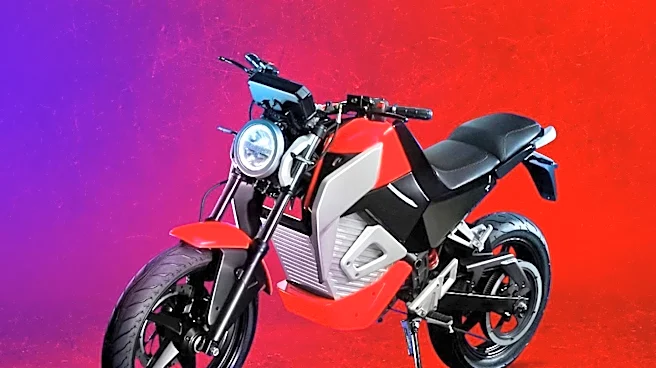
International and an advisor to Ultraviolette. This capital infusion is earmarked to significantly scale Ultraviolette's manufacturing capabilities, advance the development of its next-generation electric vehicle platforms, and accelerate its international expansion efforts. The company plans to deploy the funds to boost production of its current models, the F77 and X-47, and upcoming products like the Tesseract and Shockwave. A key strategic objective for Ultraviolette is its entry into the United States market by 2027, alongside broader expansion into Latin America and Southeast Asia. Lip-Bu Tan, who has also personally invested and will serve as an advisor, expressed admiration for Ultraviolette's deep engineering expertise and commitment to solving complex problems, highlighting their focus on creating truly differentiated technology for the long term.
Why It's Important?
This funding round and Ultraviolette's strategic focus on the U.S. market signal a growing international interest in the American electric vehicle sector, particularly in the two-wheeler segment. The entry of a new player with advanced battery technology and vertically integrated capabilities could intensify competition and drive innovation within the U.S. EV landscape. For American consumers, this could translate into a wider array of electric motorcycle and scooter options, potentially at more competitive prices, and with advanced features like radar-based safety. The investment also underscores the increasing global recognition of India's engineering prowess in the EV space, potentially fostering more cross-border collaborations and technology transfers. Furthermore, the involvement of prominent figures like Lip-Bu Tan, a seasoned technology industry leader, lends credibility and strategic guidance to Ultraviolette, which could accelerate its market penetration and technological advancements, ultimately benefiting the broader U.S. electric mobility ecosystem.
What's Next?
Ultraviolette plans to utilize the newly acquired capital to scale its production significantly. The company aims to increase its annual manufacturing capacity from the current 50,000-60,000 units to 250,000 units in the first phase of a new facility in Tamil Nadu, with the potential to reach 500,000 units. This expansion is anticipated to meet demand within the next 18-24 months. Concurrently, Ultraviolette will continue to develop its next-generation global EV platforms, leveraging its in-house expertise in battery technology, power electronics, vehicle architecture, and intelligent software. The company is also preparing for pilot market entries in the U.S., Latin America, and Southeast Asia, with a specific target for U.S. market entry in 2027. This will involve establishing distribution networks and adapting products to meet local regulations and consumer preferences in these new markets.
Beyond the Headlines
Ultraviolette's ambition to enter the U.S. market with its electric two-wheelers highlights a broader trend of diversification within the electric vehicle industry. While much of the focus has been on electric cars, the growth of electric motorcycles and scooters represents a significant, yet often overlooked, segment of sustainable transportation. The company's emphasis on developing its own battery technology and integrated platforms suggests a long-term strategy to control key components and intellectual property, which could give it a competitive edge in performance, range, and safety. This approach also raises questions about the future of supply chains in the EV sector, potentially leading to more localized production or specialized international partnerships. The introduction of advanced safety features like radar-based systems in two-wheelers could also set new industry standards, influencing regulatory bodies and consumer expectations for motorcycle safety in the U.S. and globally.