

What's Happening?
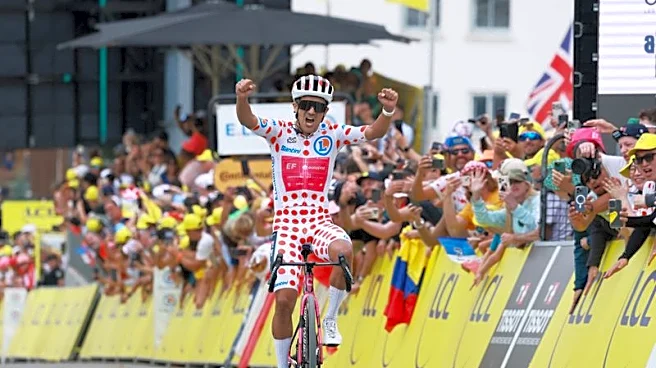
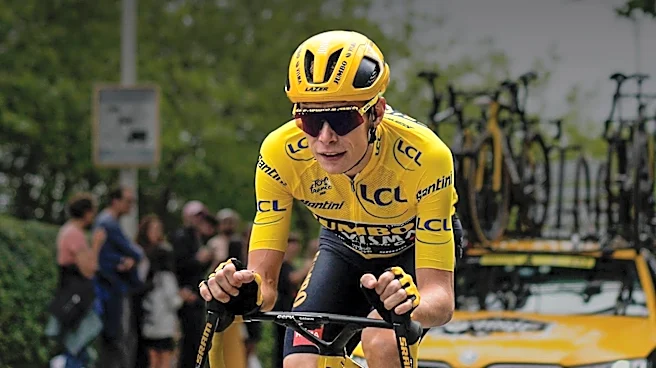
Following the incident involving Einar Rubio's crash into a UAE Team Emirates vehicle during the Tour de France, race organizers have defended their crowd control measures. The crash, which occurred on the Alpe d'Huez climb, was attributed to a spectator
falling in front of the team car, causing it to brake suddenly. Tour Race Director Thierry Gouvenou suggested that the use of modern cars with sensors contributed to the incident, implying that older vehicles might have prevented the crash. Despite the challenges, Gouvenou expressed satisfaction with the measures taken to manage the large crowds, including additional barriers and police presence.
Why It's Important?
The incident raises questions about the effectiveness of current crowd control strategies at major cycling events. With the Tour de France attracting massive crowds, ensuring the safety of riders and spectators is paramount. The reliance on modern vehicle technology in race convoys also comes under scrutiny, as it may introduce new risks. The organizers' response highlights the ongoing debate about balancing fan engagement with safety, and the need for innovative solutions to manage large-scale sporting events.
What's Next?
As the Tour de France progresses, organizers may face pressure to reassess and potentially enhance their crowd control strategies. This could involve exploring new technologies or methods to better manage spectator behavior and ensure rider safety. The incident may also prompt discussions within the cycling community about the role of vehicle technology in race safety and the potential need for regulatory changes. Future races will likely be closely monitored to evaluate the effectiveness of any new measures implemented.